05
Sep 13

Évora

Thursday
The big “drive to the south” day, broken only by a visit to the medieval gem of Évora town. Do I need to say it’s another UNESCO site?

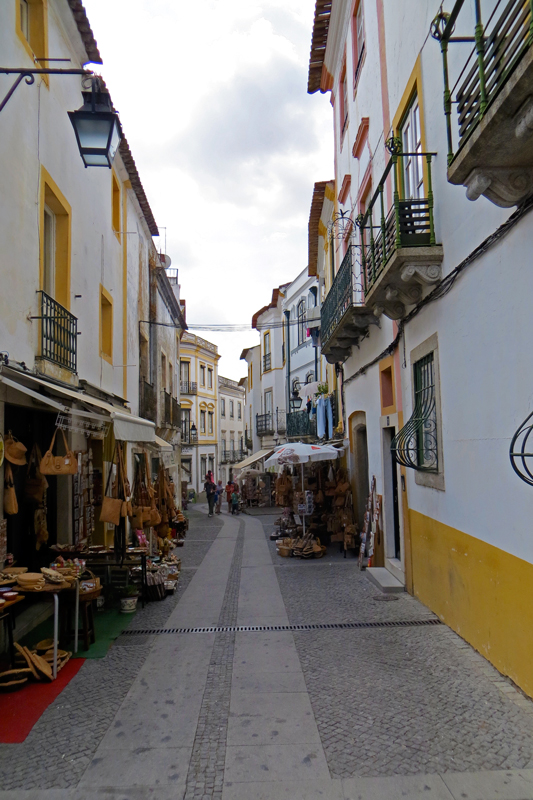
This museum-city, whose roots go back to Roman times, reached its golden age in the 15th century, when it became the residence of the Portuguese kings. Its unique quality stems from the whitewashed houses decorated with azulejos and wrought-iron balconies dating from the 16th to the 18th century. Its monuments had a profound influence on Portuguese architecture in Brazil.

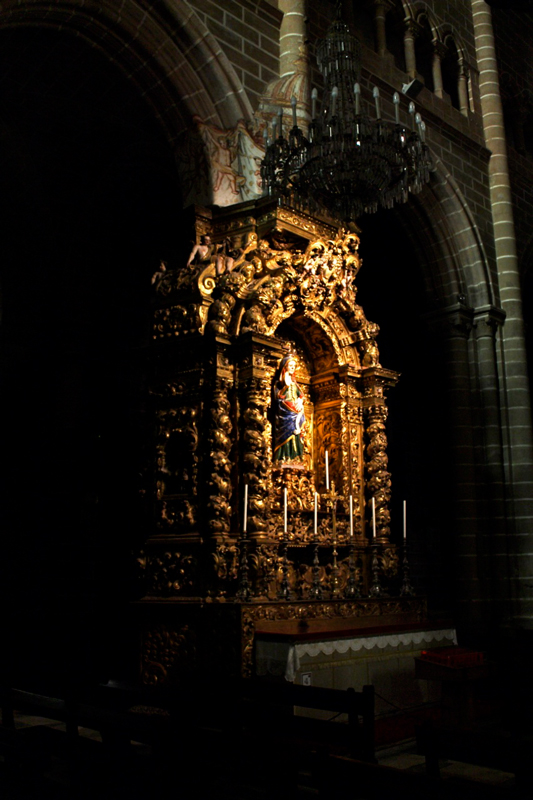
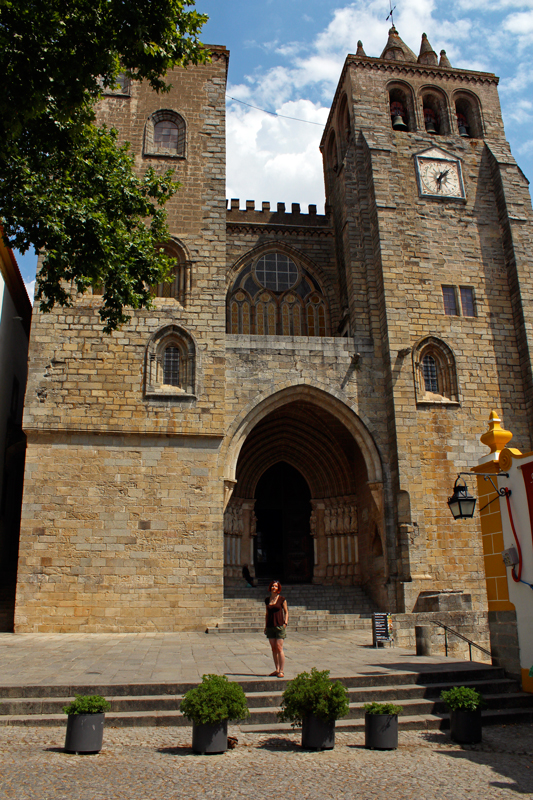
Cathedral of Évora

Cathedral of Évora

Central nave of Évora Cathedral

Central nave of Évora Cathedral

Yellow Evora Streets

Yellow Evora Streets

We saw most of the sites in Évora, except for the ossuary, which neither of us had any interest in seeing, because ewww.

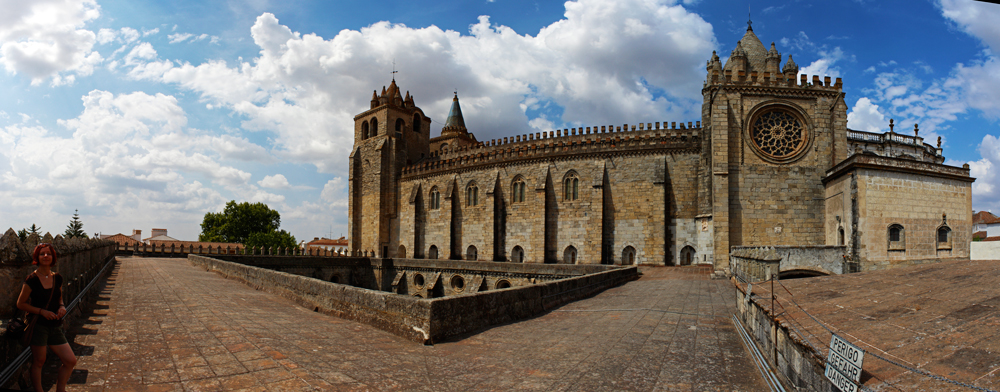
Rooftop panorama

Rooftop panorama

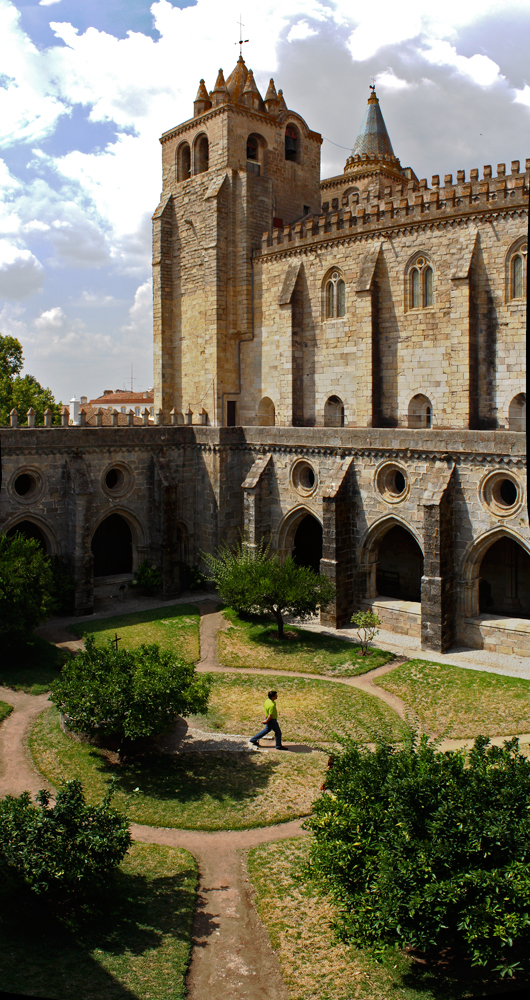
Evora Cathedral Cloisters

Evora Cathedral Cloisters

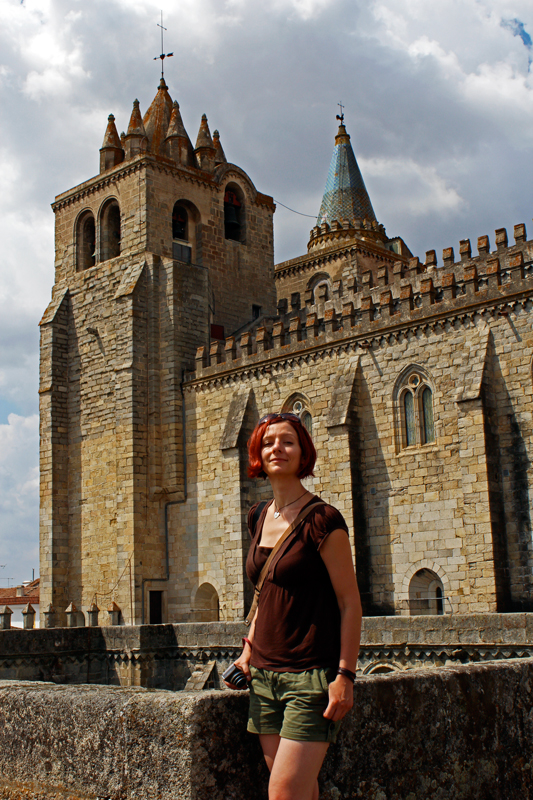
Gina and the Cathedral towers

Gina and the Cathedral towers

Cathedral Rooftop

Cathedral Rooftop

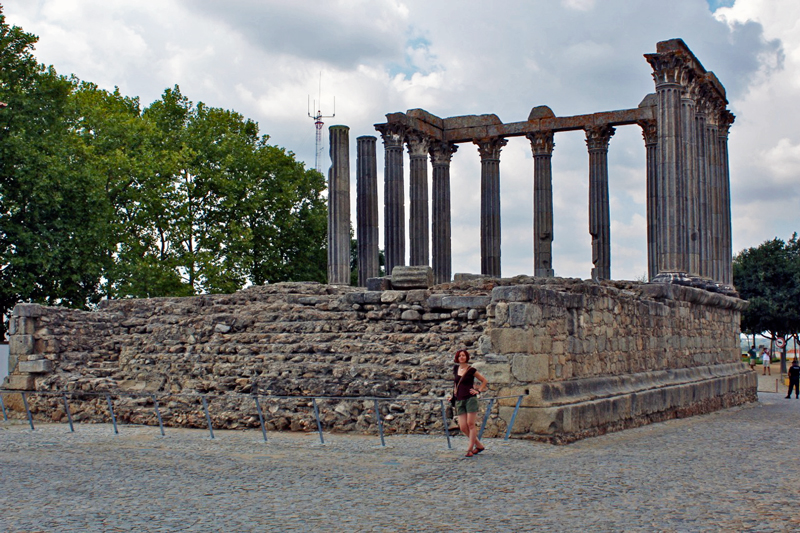
Roman Temple of Évora

Roman Temple of Évora

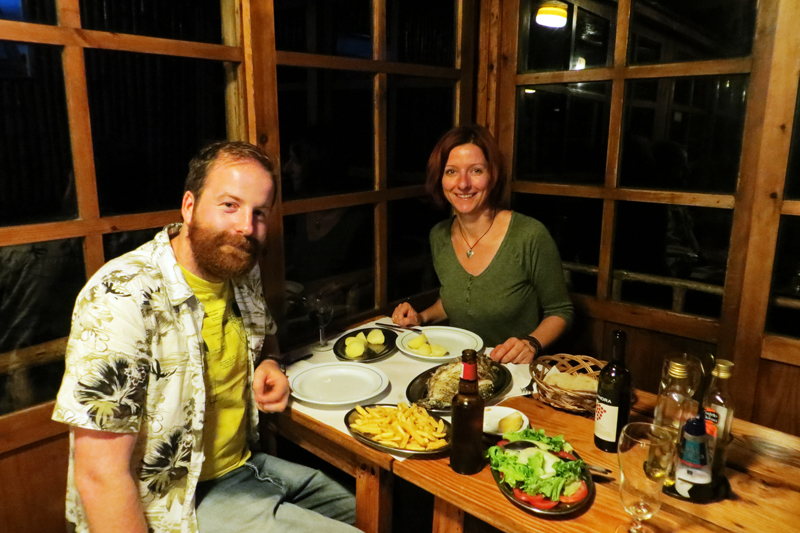
In the afternoon we made it all the way to Vila Nova de Milfontes, a chilled out beach town, where we intend to spend a day of beach relax tomorrow. In the evening we went to a grilled fish restaurant beautifully located on the beach, and had some huge grilled sea breams, which were delicious.

Grilled sea breams at Vila Nova de Milfontes

Grilled sea breams at Vila Nova de Milfontes


04
Sep 13

Tomar – Batalha – Alcobaça

Wednesday
We got up super early because this was to be a culture-packed day, and we wanted to have a lot of time to absorb all the new information. The bar in the camp wasn’t even open yet, so we got on our way without a coffee and headed first to Tomar.
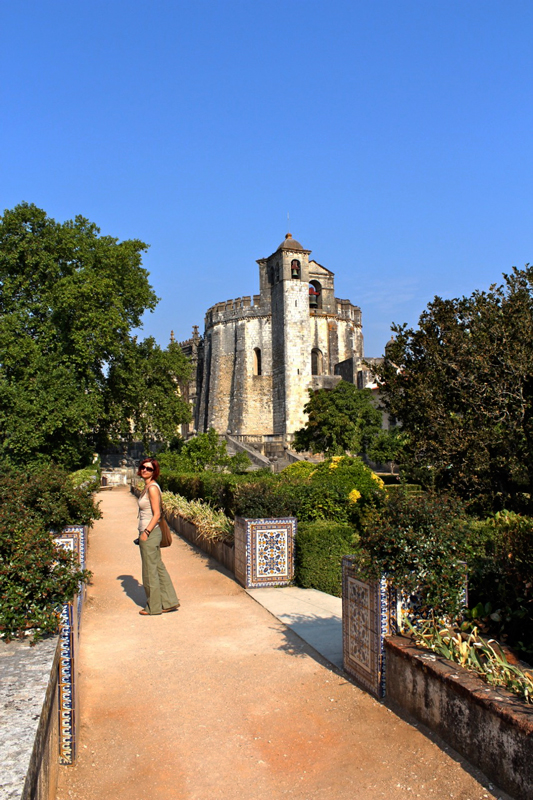
Gina & the Convento de Cristo
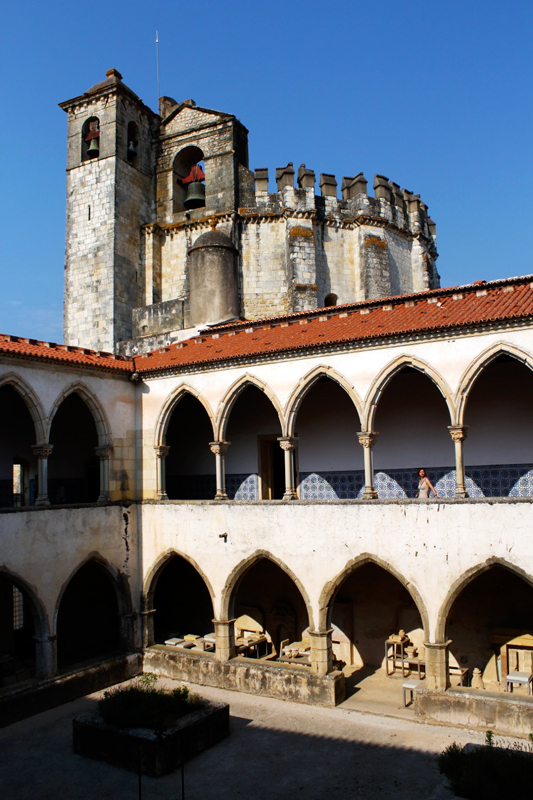
Gina & the Convento de Cristo

Gina & Claustro da Lavagem

Gina & Claustro da Lavagem

Tomar’s Convento de Cristo, former Knights Templar HQ, is an absolutely exquisite architectural wonder and we loved it. This is what our book says about it:

Wrapped in equal parts splendour and mystery, the Knights Templar held enormous power in Portugal from the 12th to 16th centuries, and largely bankrolled the Age of Discoveries. Their headquarters are set on wooded slopes above the town and enclosed within 12th-century walls. The Convento de Cristo is a stony expression of magnificence combined with the no-holds-barred theatricality that long lent the order its particular fascination. The monastery was founded in 1160 by Gualdim Pais, Grand Master of the Templars. It has chapels, cloisters and chapter houses in widely diverging styles, added over the centuries by successive kings and Grand Masters.

Gina chilling in the sun
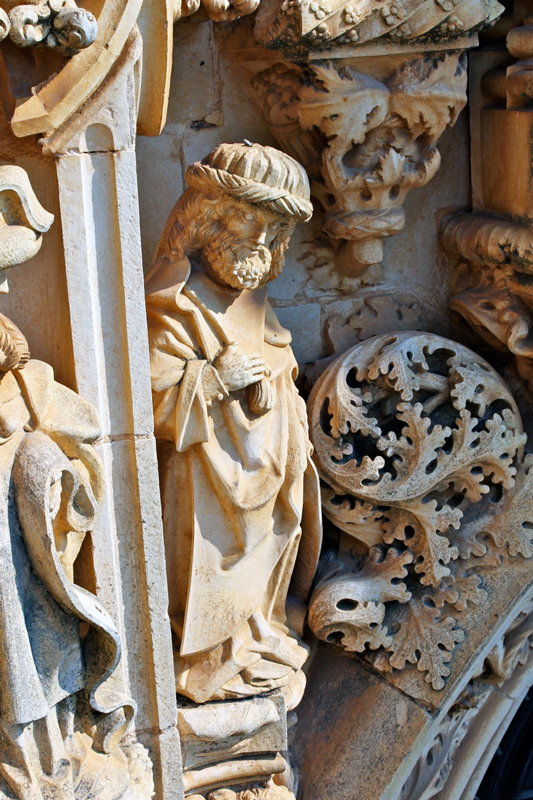
Gina chilling in the sun

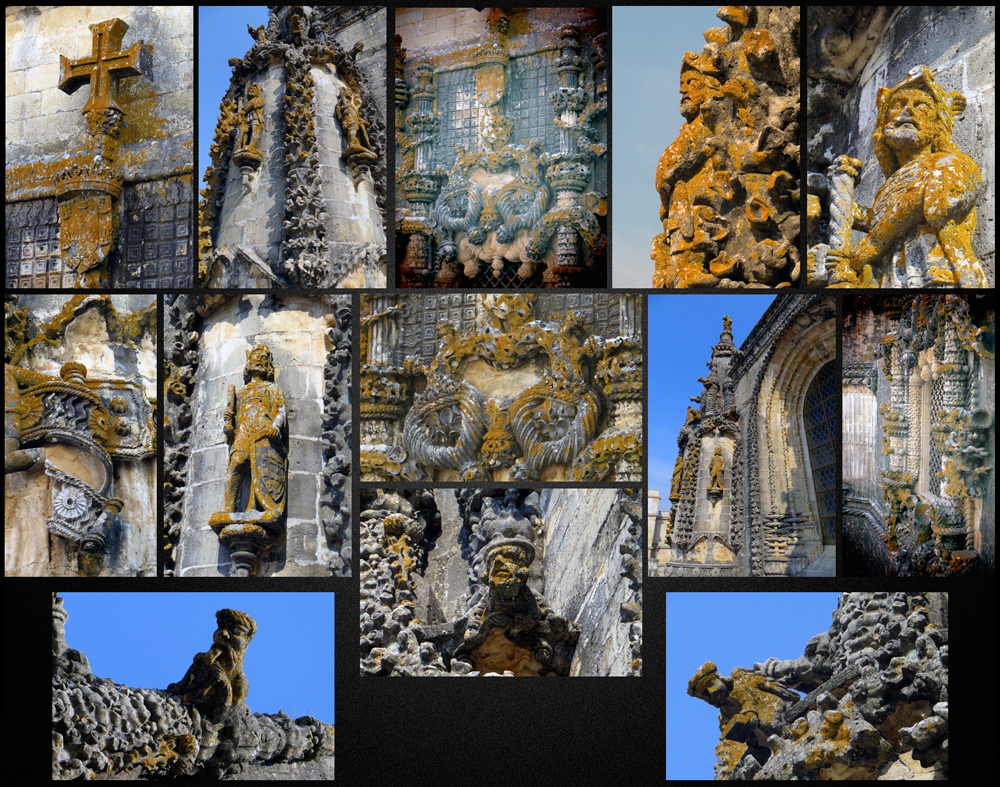
Fine Manueline style detail

Fine Manueline style detail

Of course, Tomar’s monastery is on the UNESCO list, and you can read about it here. It was here at Tomar that I found my new all-time favourite architectural style – Manueline – “flamboyant gothic” if you can wrap your head around that. As we are going to see many spectacular examples of the style during our trip, brief intro to the style from wiki is in order:

The Manueline (Portuguese: estilo manuelino, or Portuguese late Gothic), is the sumptuous, composite Portuguese style of architectural ornamentation of the first decades of the 16th century, incorporating maritime elements and representations of the discoveries brought from the voyages of Vasco da Gama and Pedro Álvares Cabral. This innovative style synthesizes aspects of Late Gothic architecture with influences of the Spanish Plateresque style, Italian urban architecture, and Flemish elements. It marks the transition from Late Gothic to Renaissance. The construction of churches and monasteries in Manueline was largely financed by proceeds of the lucrative spice trade with Africa and India.

The style was given its name, many years later, by Francisco Adolfo de Varnhagen, Viscount of Porto Seguro, in his 1842 book, Noticia historica e descriptiva do Mosteiro de Belem, com um glossario de varios termos respectivos principalmente a architectura gothica, in his description of the Jerónimos Monastery. Varnhagen named the style after King Manuel I, whose reign (1495–1521) coincided with its development. The style was much influenced by the astonishing successes of the voyages of discovery of Portuguese navigators, from the coastal areas of Africa to the discovery of Brazil and the ocean routes to the Far East, drawing heavily on the style and decorations of East Indian temples.

Although the period of this style did not last long (from 1490 to 1520), it played an important part in the development of Portuguese art. The influence of the style outlived the king. Celebrating the newly maritime power, it manifested itself in architecture (churches, monasteries, palaces, castles) and extended into other arts such as sculpture, painting, works of art made of precious metals, faience and furniture.

The window of the Convent of Christ in Tomar is a well-known example of Manueline style, as our bok says:

It’s the ultimate in Manueline extravagance, a celebration of the Age of Discoveries: a Medusa tangle of snaking ropes, seaweed and cork boats, on top of which floats the Cross of the Order of Crist and the royal arms and armillary spheres of Dom Mauel.
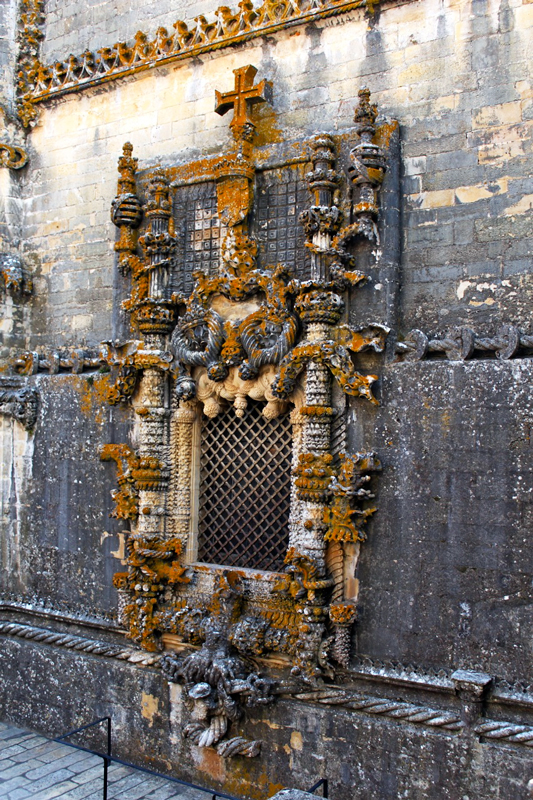
The famous chapterhouse window, made by Diogo de Arruda in 1510-1513.

The famous chapterhouse window, made by Diogo de Arruda in 1510-1513.

And I would add that it also have a bearded man on it, so what’s not to like? Manueline 4evs!
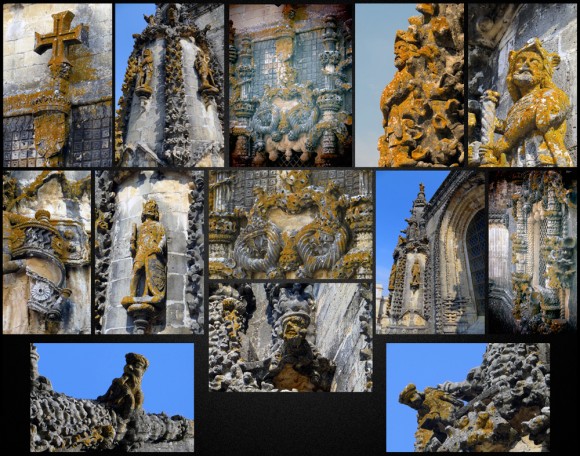
Manueline details

Manueline details

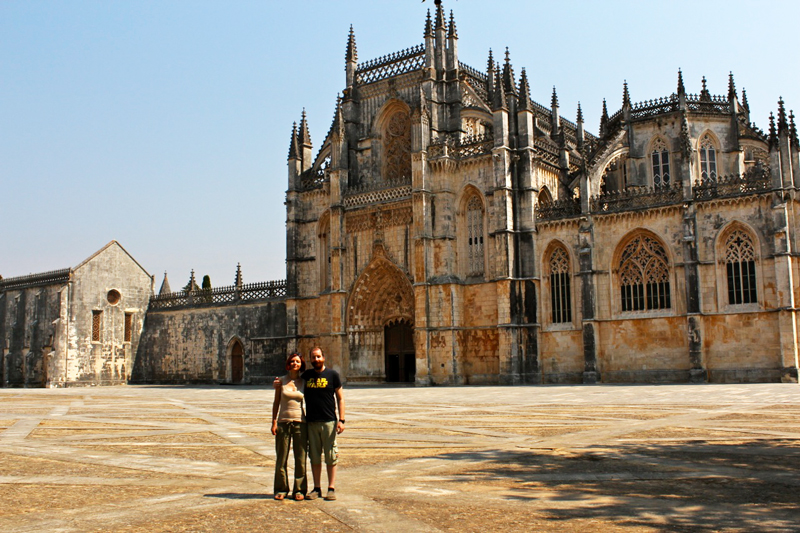
From Tomar we headed to Batalha’s Mosteiro de Santa Maria da Vitoria, another UNESCO site on the list for today:

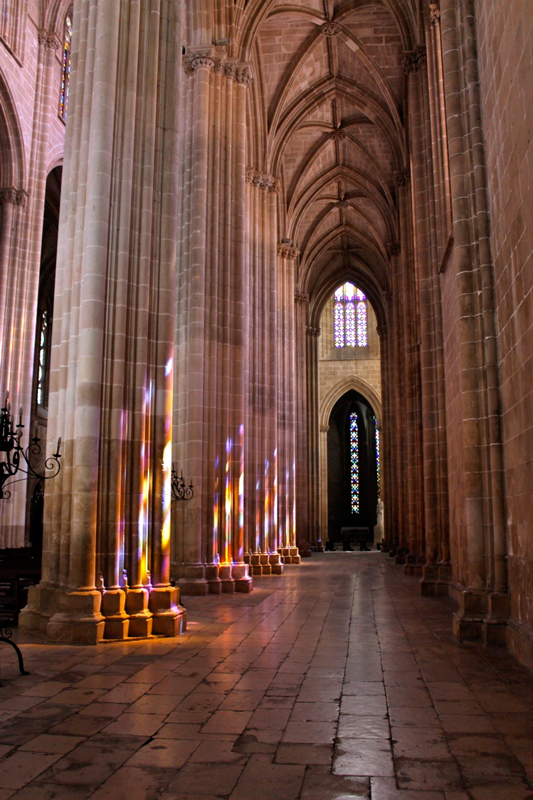
The Monastery of the Dominicans of Batalha was built to commemorate the victory of the Portuguese over the Castilians at the battle of Aljubarrota in 1385. It was to be the Portuguese monarchy’s main building project for the next two centuries. Here a highly original, national Gothic style evolved, profoundly influenced by Manueline art, as demonstrated by its masterpiece, the Royal Cloister.
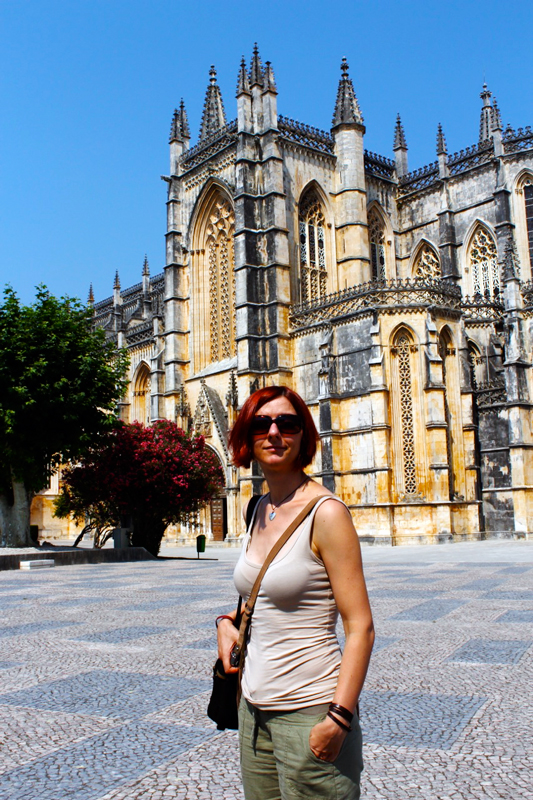
Gina at Batalha’s Mosteiro de Santa Maria da Vitoria
Gina at Batalha’s Mosteiro de Santa Maria da Vitoria

Stained glass window colours

Stained glass window colours

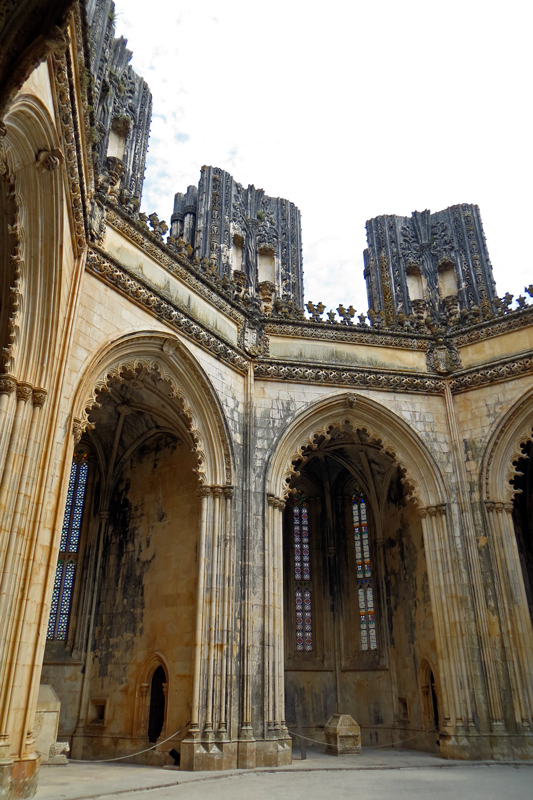
My favourite part were the “unfinished chapels”, another stunning example of Manueline architecture.
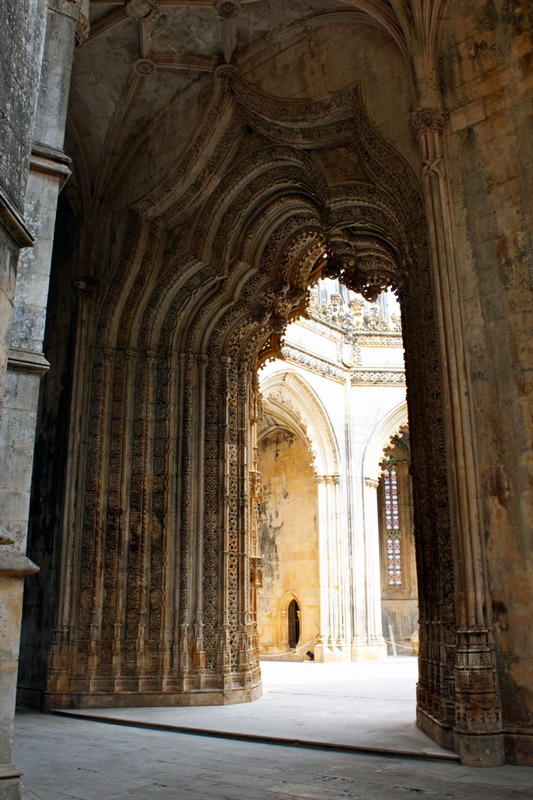
Entrance to the "Unfinished chapels"

Entrance to the “Unfinished chapels”

"Unfinished chapels"

“Unfinished chapels”

They form a separate octagonal structure tacked on the choir of the church (via a retrochoir) and only accessible from the outside. It was commissioned in 1437 by King Edward of Portugal (“Dom Duarte”, d.1438) as a second royal mausoleum for himself and his descendants. The original design, begun by Huguet, was altered by successive architects, especially Mateus Fernandes (who is buried inside the church). The octagonal rotunda has seven radiating hexagonal chapels. In the corners of the chapels stand the massive unfinished buttresses, that were intended to support the vault. These pillars, designed by Diogo Boitac, are decorated with Manueline motives carved in stone. The portal rises to a monumental fifteen metres. It was originally built in Gothic style, but was transformed beyond recognition by Mateus Fernandes into a masterpiece of Manueline style (completed in 1509). It is completely decorated into a lacework of sumptuous and stylized Manueline motives: armillary, spheres, winged angels, ropes, circles, tree stumps, clover-shaped arches and florid projections. (fancy words from wiki)
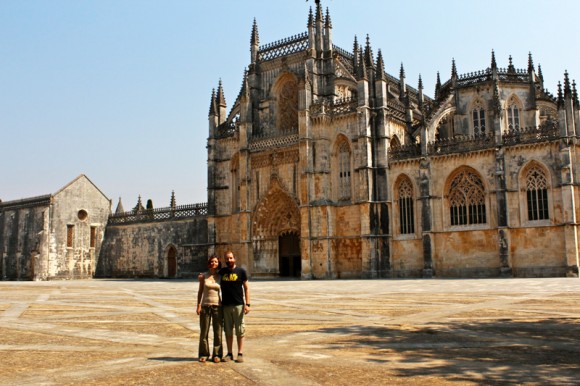
Us outside the Batalha Monastery

Us outside the Batalha Monastery

To finish the day, we drove to Alcobaça, to see the last monastery and UNESCO site for today.

The Monastery of Santa Maria d’Alcobaça, north of Lisbon, was founded in the 12th century by King Alfonso I. Its size, the purity of its architectural style, the beauty of the materials and the care with which it was built make this a masterpiece of Cistercian Gothic art.
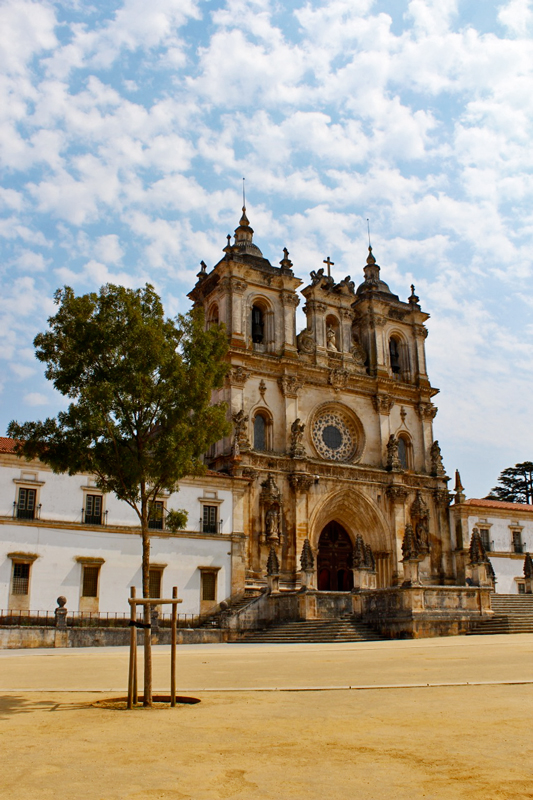
Monastery of Santa Maria d’Alcobaça
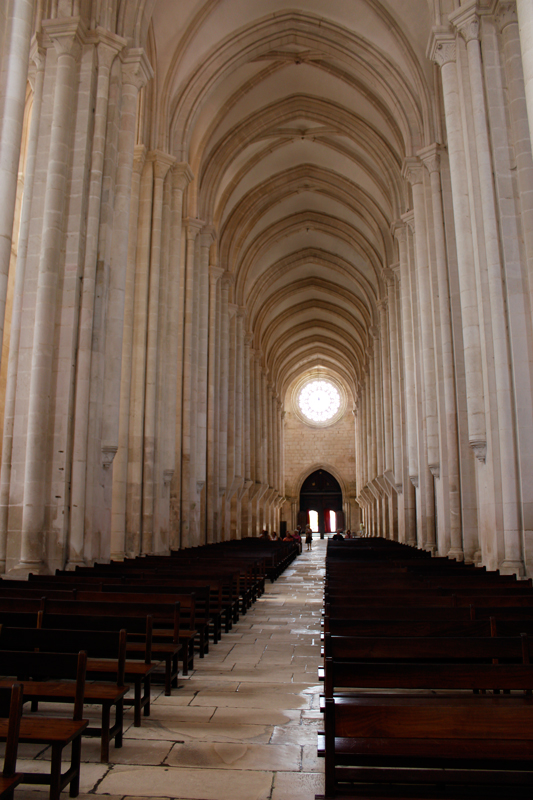
Monastery of Santa Maria d’Alcobaça

Main Chapel

Main Chapel

It was pretty good no doubt, although by now our standards were pretty high and not just every unesco site was going to make our jaws drop. Afterwards we finally had a very late lunch and also coffee and cakes, and were mighty tired, just looking to crash down somewhere.
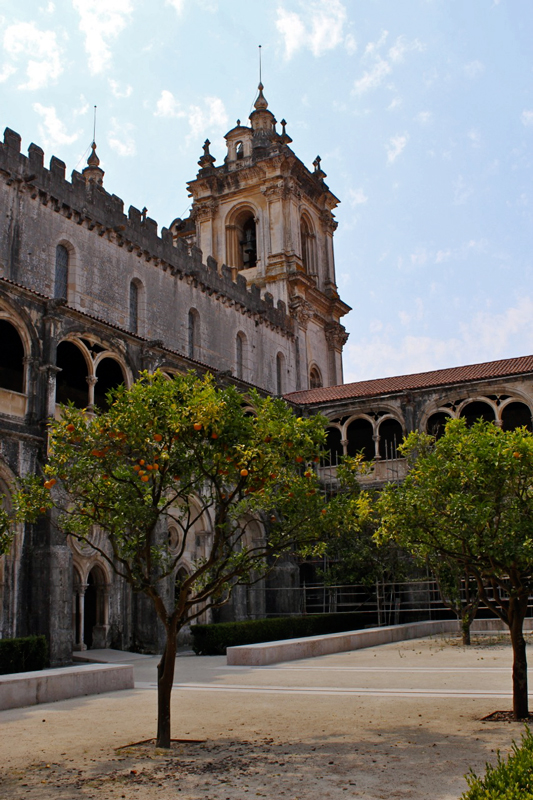
Cloister of Silence
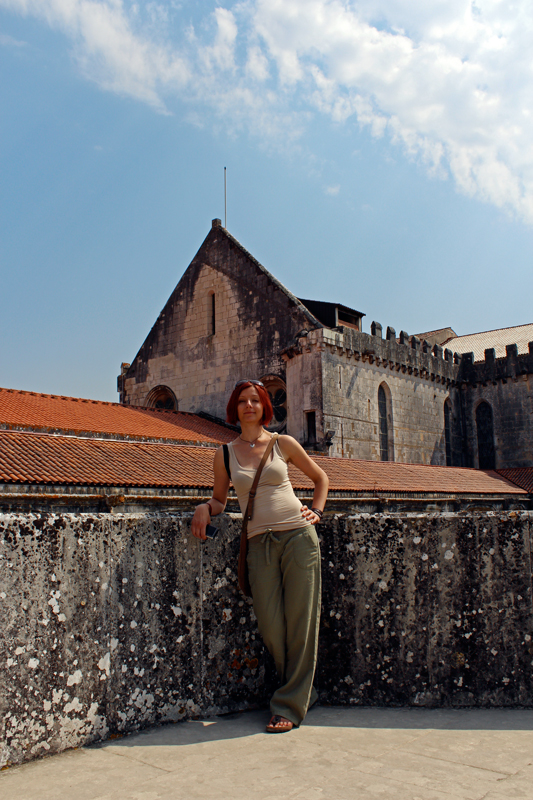
Cloister of Silence

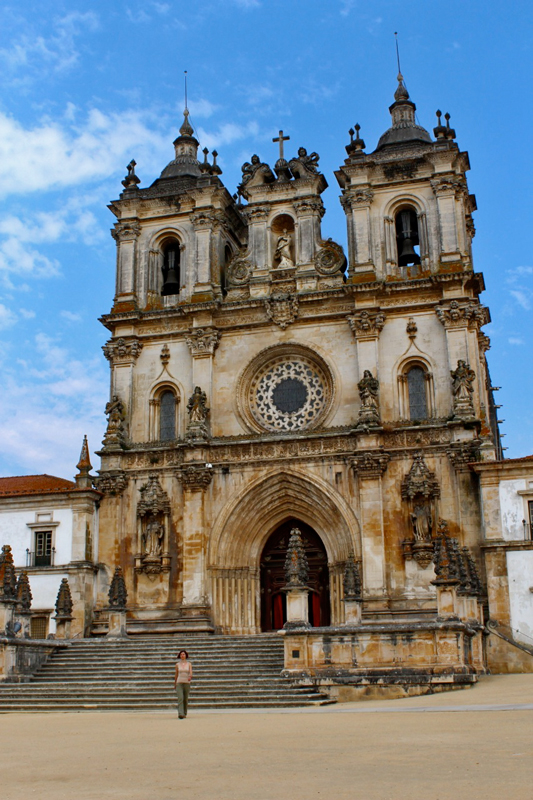
Gina and the Alcobaça Monastery.
Gina and the Alcobaça Monastery.

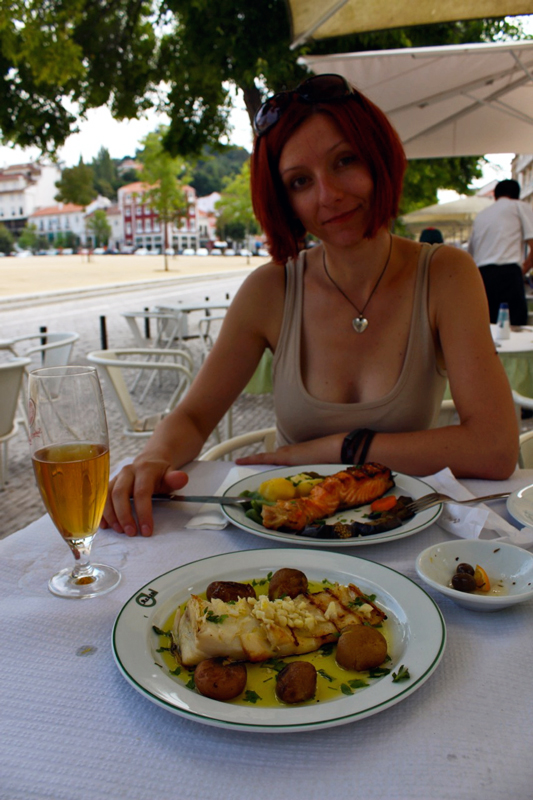
Eating well!
Eating well!

Monastery of Santa Maria d’Alcobaça

Monastery of Santa Maria d’Alcobaça

We camped in a nice little town Foz do Arelho with a beautiful beach, where we watched the last surfers of the day catching their waves.
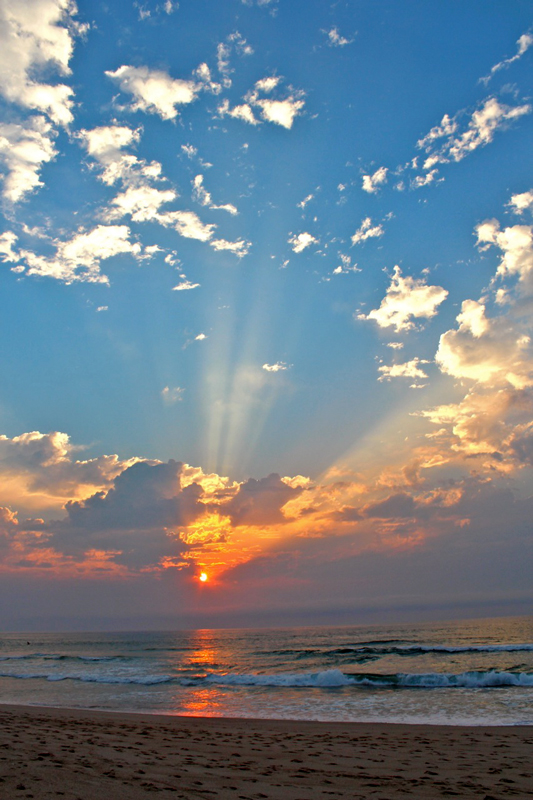
Sun setting over the Atlantic Ocean
Sun setting over the Atlantic Ocean

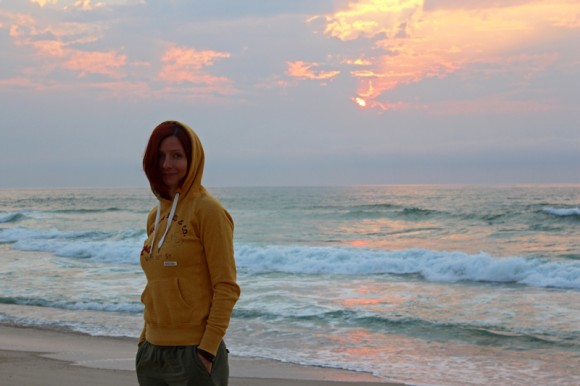
Gina at Foz do Arelho
Gina at Foz do Arelho

03
Sep 13

Serra da Estrela – Coimbra

Tuesday
We left the camp and headed south-west to Coimbra with the help of Nexy’s GPS. After finding a parking surprisingly near the centre of Coimbra without knowing where we are, we were ready for the sights in the heat.

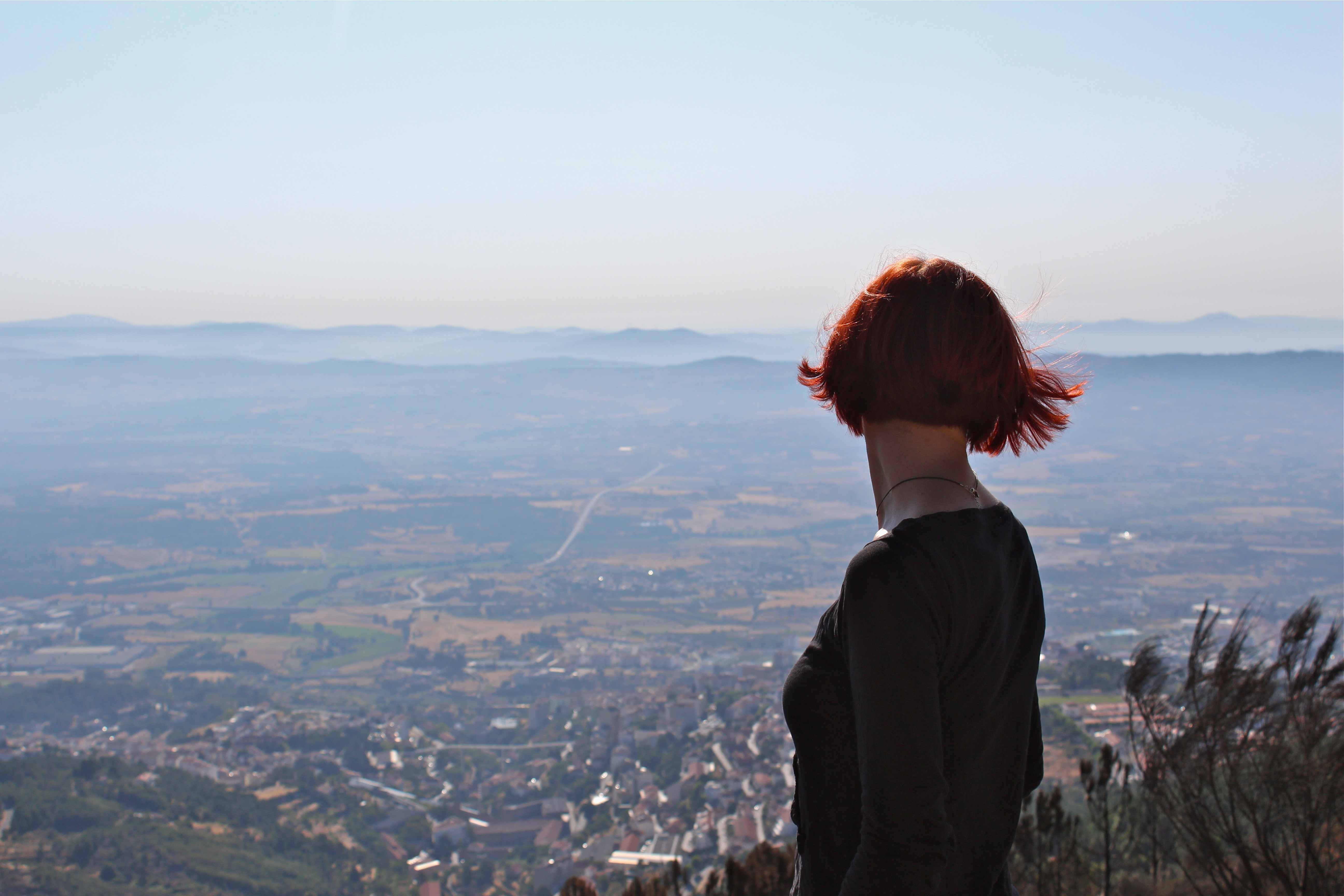
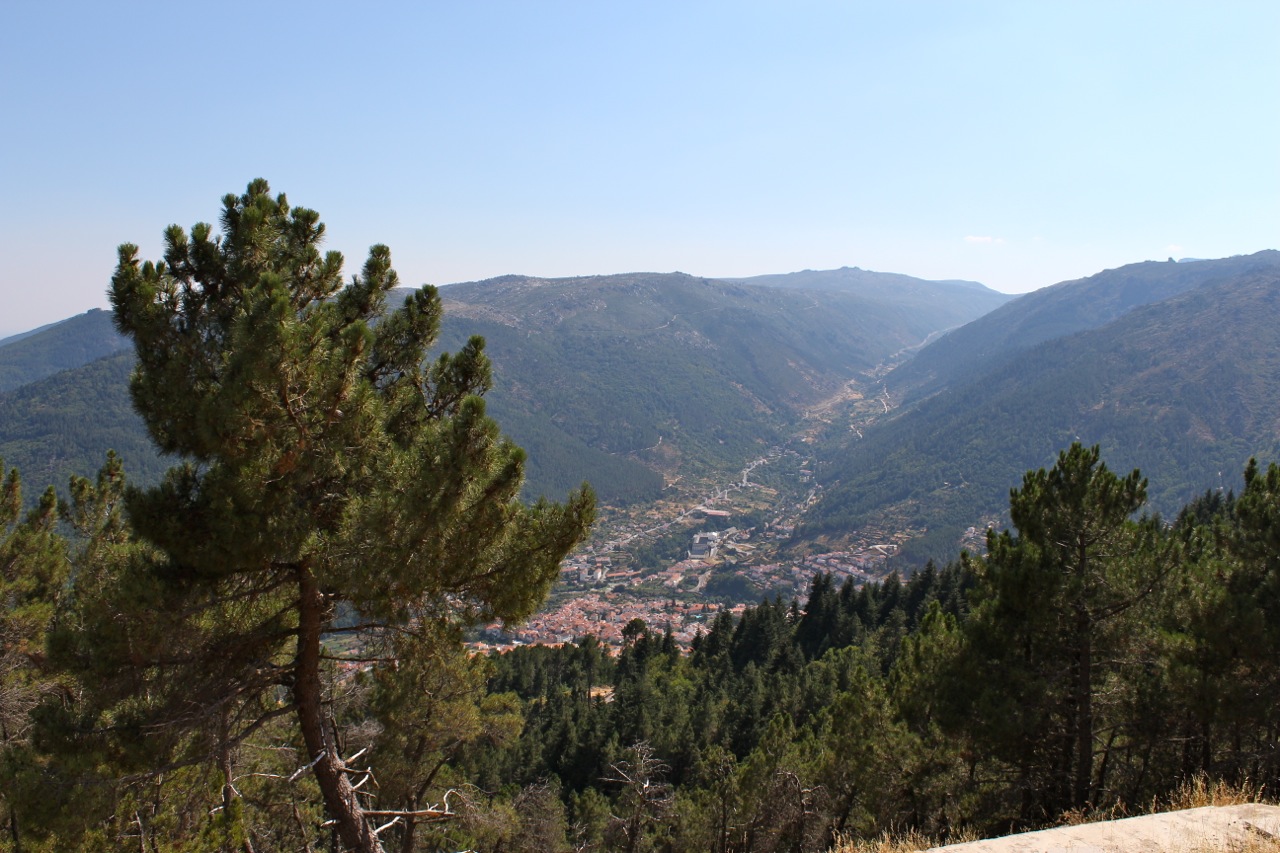
Gina overlooking Serra da Estrela

Gina overlooking Serra da Estrela

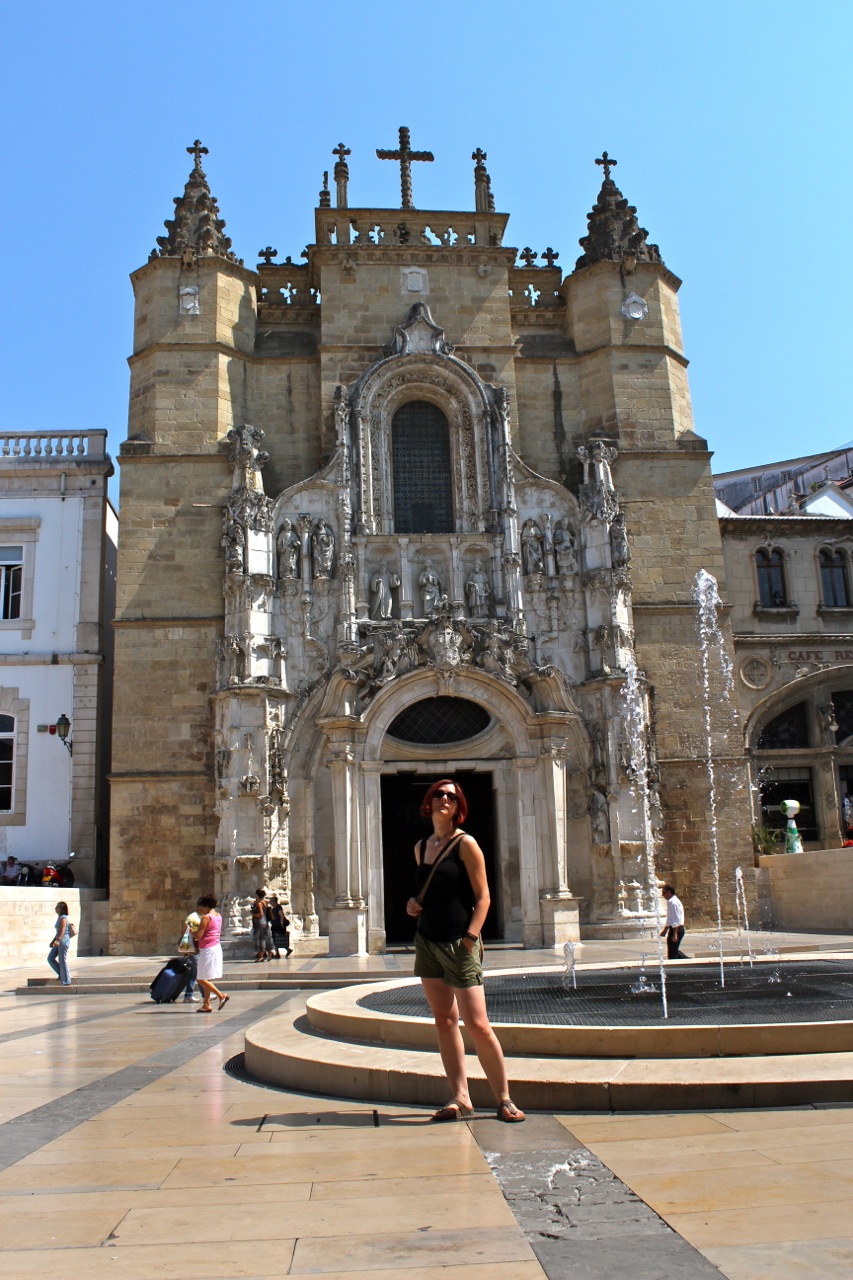
Starting at the Praça 8 de Mayo, the beautiful Igreja de Santa Cruz gave us a taste of what’s ahead in the town. After climbing some back-breaking stairs we found the super-stunning old cathedral.

Gina & Igreja de Santa Cruz

Gina & Igreja de Santa Cruz

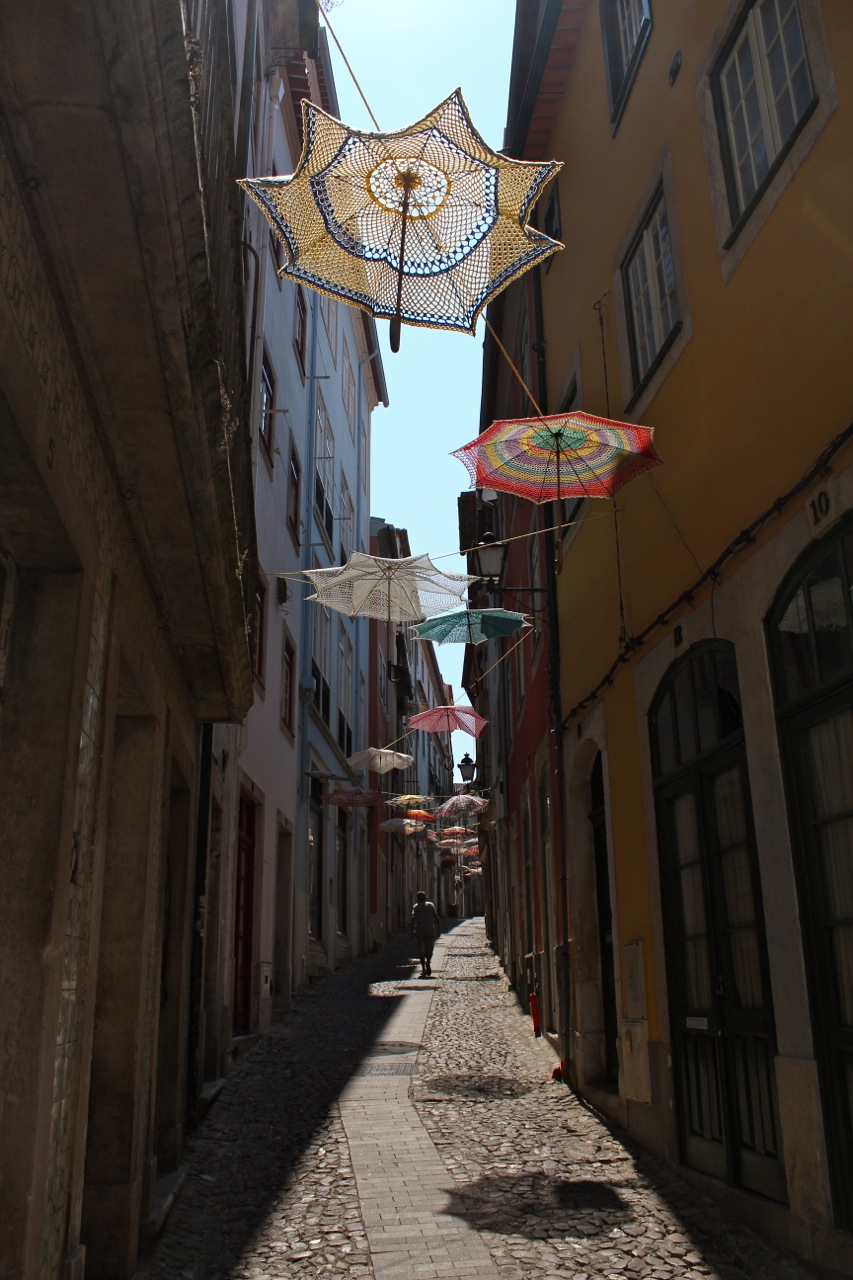
Street art in Coimbra

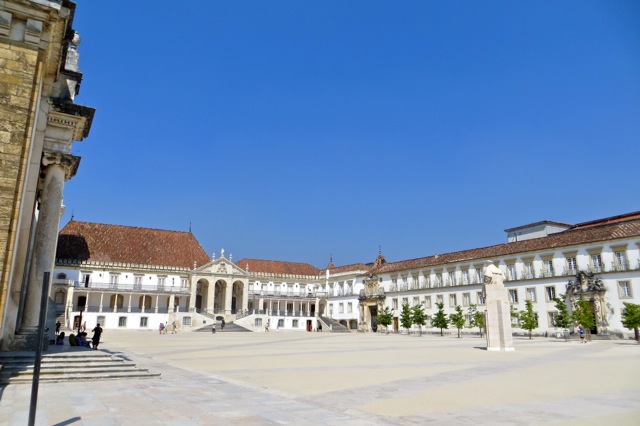
The real gem of Ciombra however lies in its old university, and we spared no expense in getting around the place, including the exquisite library and even academic prison (which is exactly what it sounds like). Our guidebook says:

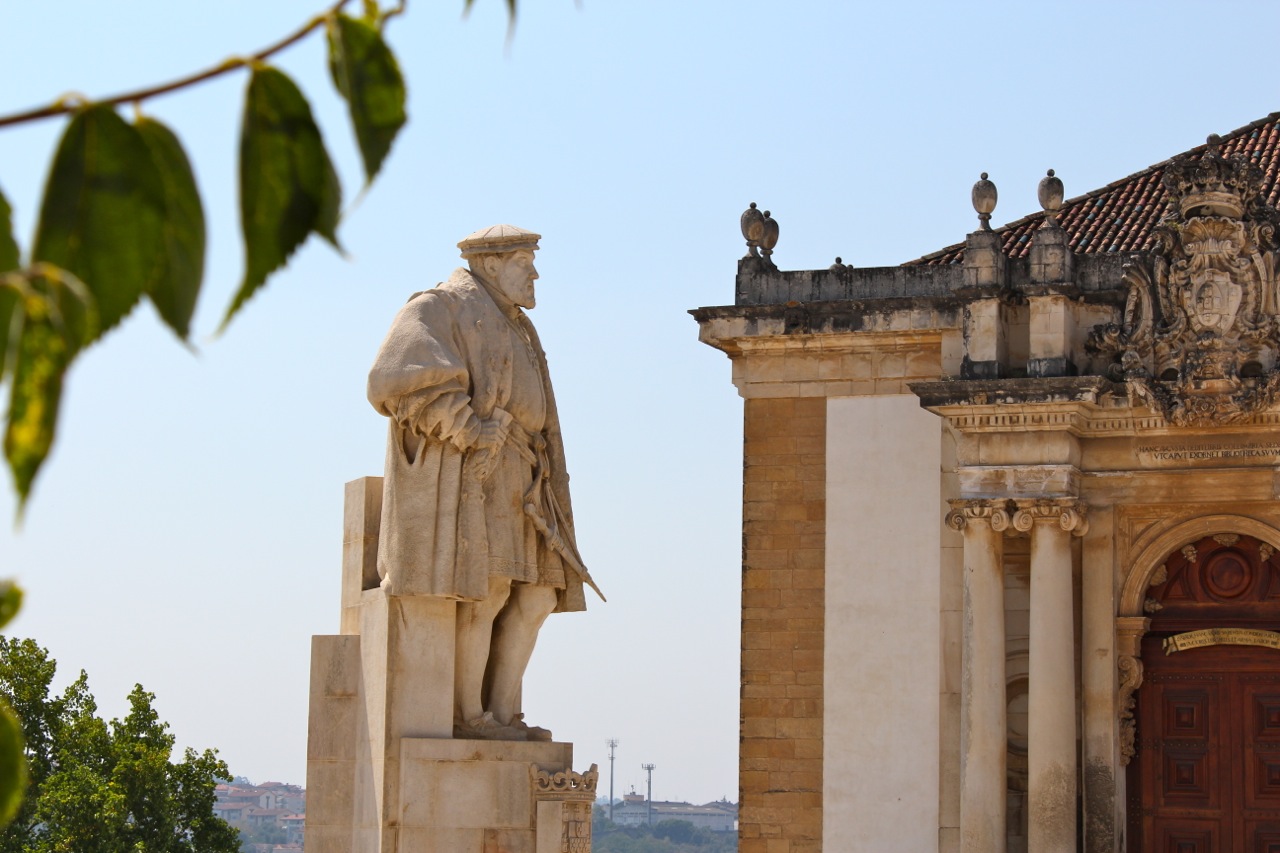
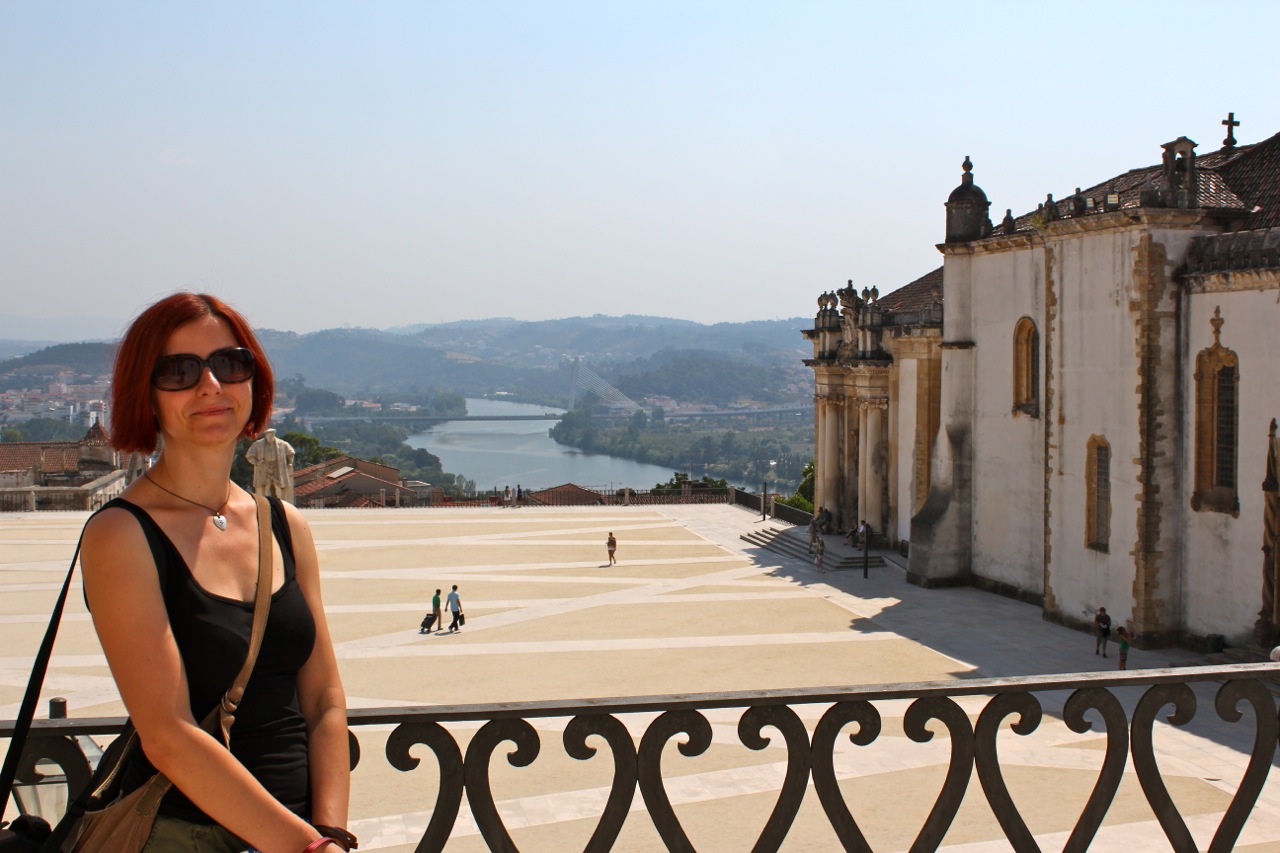
The Old University consists of a series of remarkable 16th- to 18th-century buildings all set around the vast Patio das Escolas. In the square is a statue of João III – it was he who re-established the university in Coimbra in 1537. The square’s most prominent feature is the18th-cenury clock tower. From the courtyard gate there is a staircase to the rather grand Sala dos Capelos (Graduates’ Hall), a former examination room hung with dark portraits of Portugal’s kings, and heavy quilt-like decoration. However, all else pales before the Biblioteca Joanina (João V library) from early 18thcentury. It seems too extravagant and distracting for study with its rosewood, ebony and jacaranda tables, elaborately frescoed ceilings and gilt chinoiserie bookshelves.
Coimbra university is another UNESCO World Heritage site, read about it here.

Old University Square

Old University Square

Gina on the balcony

Gina on the balcony

Statue of King João III

Statue of King João III

Afterwards, almost dropping dead from the heat, we had a great lunch downtown, including a mango mousse for Gina. We’ve been eating magnificently on this trip so far.

10

Eating well!

We decided not to linger around Coimbra but push for the coast for the night. Nearest place we found was Figuera da Foz with a campsite right on a vast and awesome beach where we saw the sunset, then had a couple of drinks in the camp bar while charging Nexy, and wearily dropped down in our great tent (Stinky II).

Sun setting at Figuera da Foz

Sun setting at Figuera da Foz


02
Sep 13

Porto – Serra da Estrela

Monday
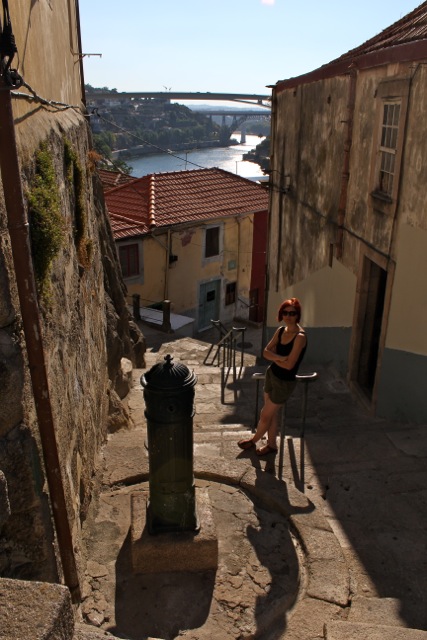
In the morning we went for another walk in Porto – the light was lovely and the streets were bustling actual life (as opposed to the tourist life of Sunday afternoon) – little shops open, people going to work, rubbish men taking bins and all that. The waking up riverfront was all fresh and breezy. We lingered around the town for a bit and then packed up our bags and headed south-east to the Parque Natural Serra da Estrela, the mountainous area which contains Portugal’s mainland’s highest peak, Torro.

1
2
Porto river front

Porto river front

4

We found the highways and the backroads in great shape and surprisingly empty of traffic. We arrived in Manteigas, a small village in the heart of the park, sleepy and incredibly spotless white, every single house looking like it just has been polished up. There was a funeral going on but not much more than that, and we didn’t find the park HQs.

5
6

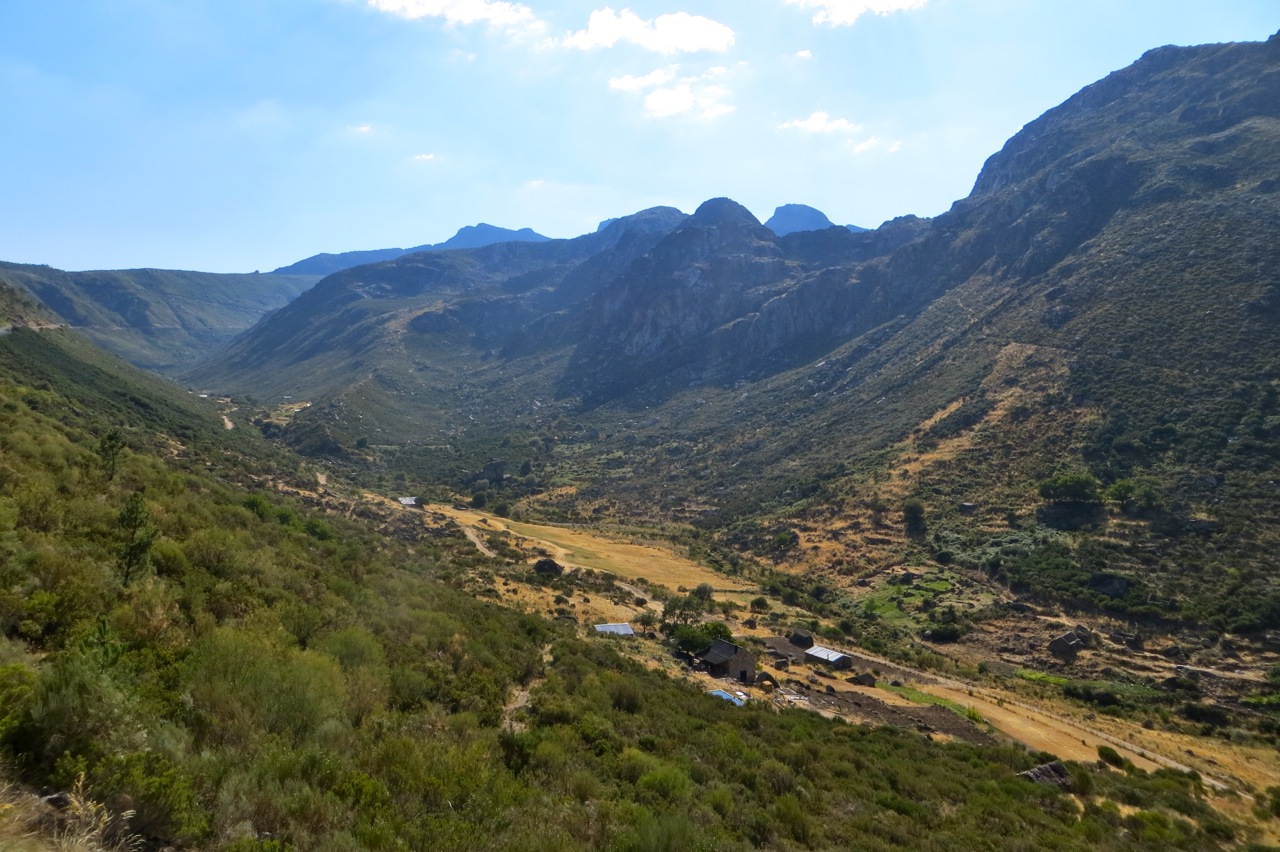
From Manteigas we took the most scenic route up the glacier Zêzere Valley with epic views and frequent stops. We made it all the way to Torre, which was a bit underwhelming after all that beauty. The campsite in the top of the valley was beautiful and deserted, but it would not have been possible to bring in the car and we didn’t want to leave it up on the road, so we found another campsite on the other side of the range, which was small and cosy and had wifi surprisingly enough. The whole hillside above it was scorched by a recent fire, which apparently lasted for four days and It was quite a sad view.
At night I woke up and threw up all over (outside of the tent though) but then slept well and the rest of the night was peaceful.


7
8

01
Sep 13

Porto

Sunday
Alarm at 4am, but we have no probs getting up. Everything’s ready, so we just got dressed and picked up our bags went out to flag a taxi. With no traffic at this hour we got to the airport still before 5am. I was a bit worried that my carry-on bag would be too big, and we know how RyanAir likes to harass people and make them pay extra – it’s like their favourite thing to do ever – but it was all ok, as a matter of fact a bit disturbingly smooth. After a quick b-fast in Starbucks we found ourselves in a completely fully booked plane direction Porto.

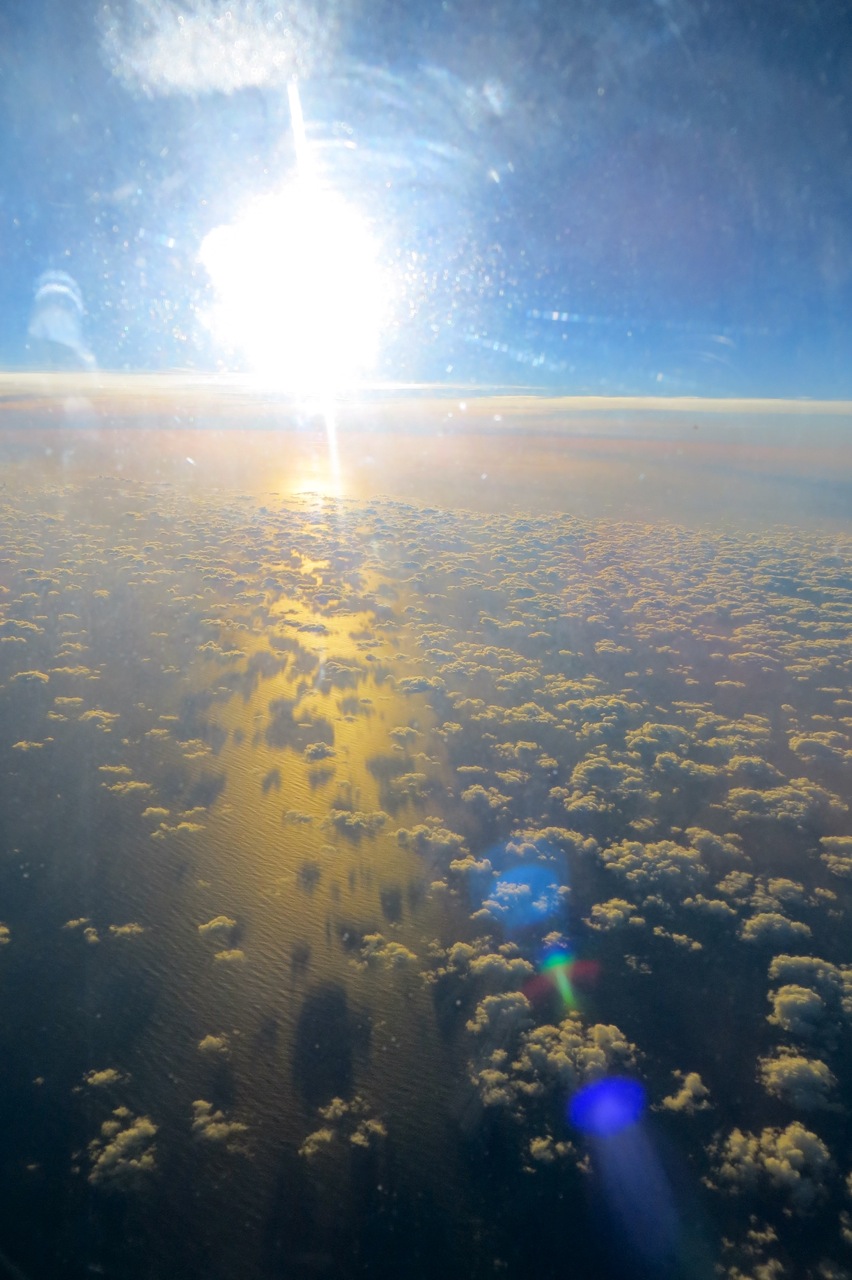
Brilliant weather for flying!

Brilliant weather for flying!

A bit of a snooze and we got out in hot and humid Porto airport – still before 9am! (This is also the point where we found out that Portugal is actually on UK time, not European – everyday we learn something new!)
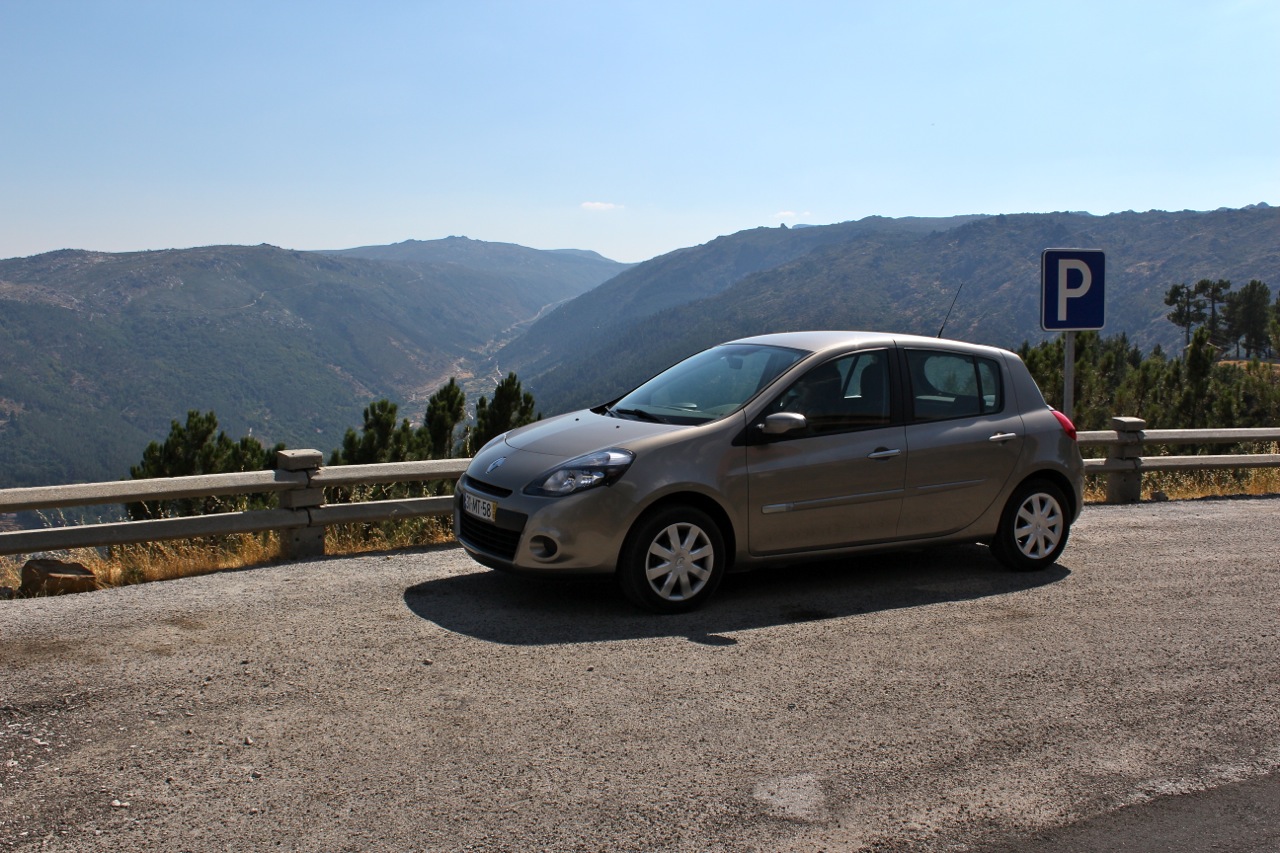
We got our rental car with no probs (Renault Clio with AC) and headed in the direction of the town centre – at least that’s what we thought. However, we got trapped in the maze of the highways and motorways, all of which failed to signpost the Porto centre. Eventually Nexy saved the day and got us the GPS signal and safely to town. Our hotel was smack in the middle of the centre in a tiny narrow one-way street encircled by a web of other on-way streets but finally we managed to park and check into our tiny but cosy room. Without further ado we dressed in our summer-Sunday-best clothes, and went to explore the town.

Porto!

Porto!

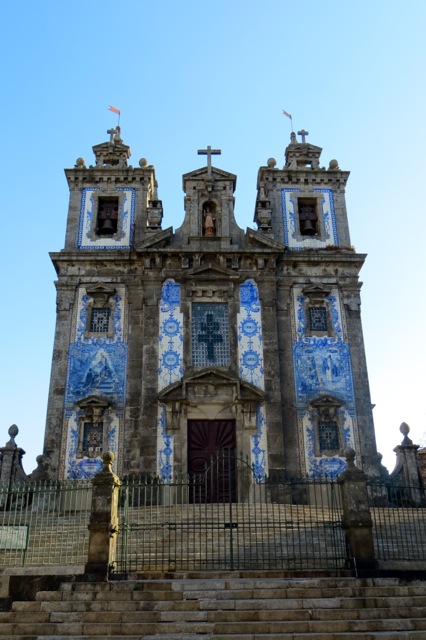
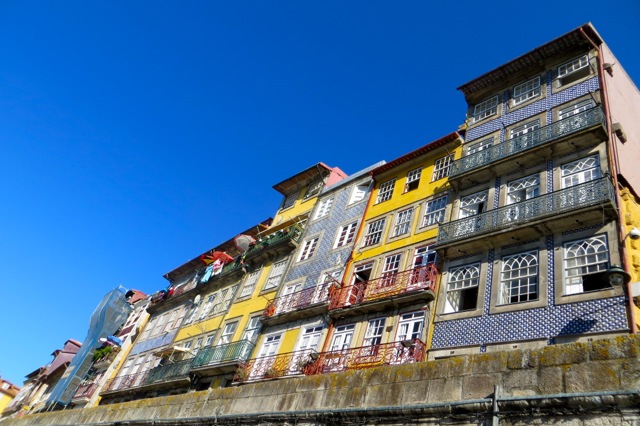
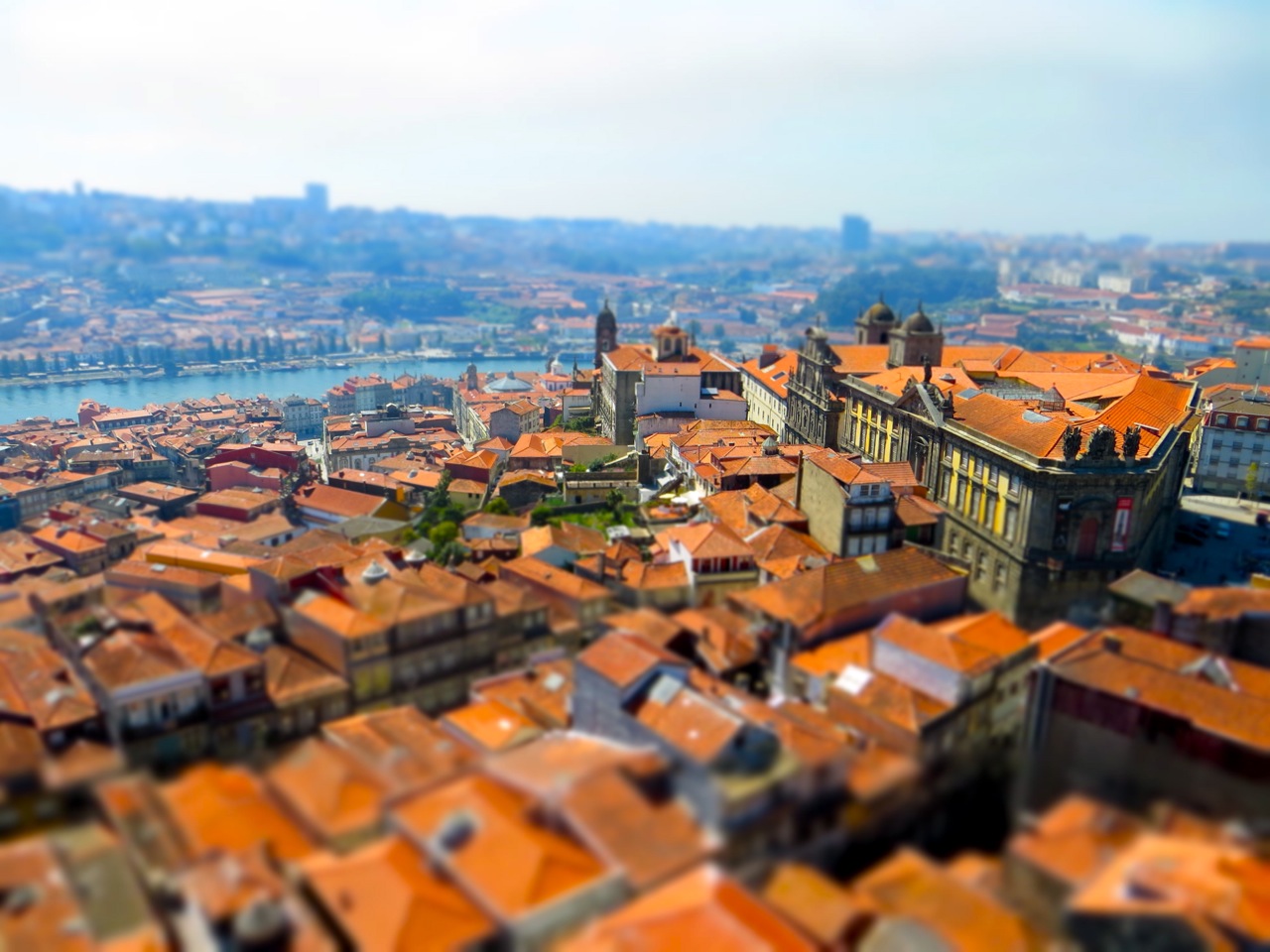
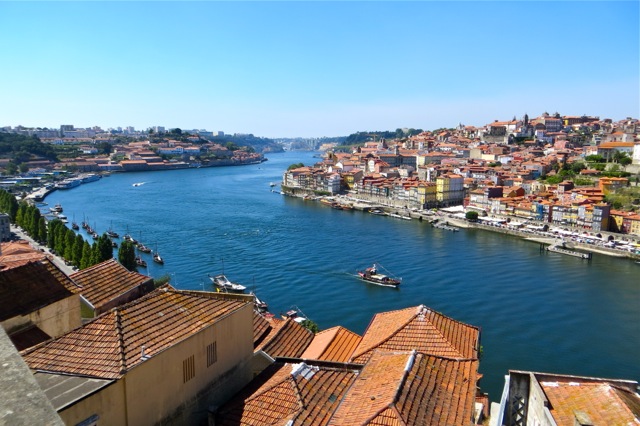
Our guide provided us with a handy walking tour suggestion, from which we occasionally diverted, and covered all the major pretty spots of Porto. Of course the main attraction are the beautiful streets of Porto themselves, with charming houses, little balconies, tiled facades, laundry lines, and terraces.

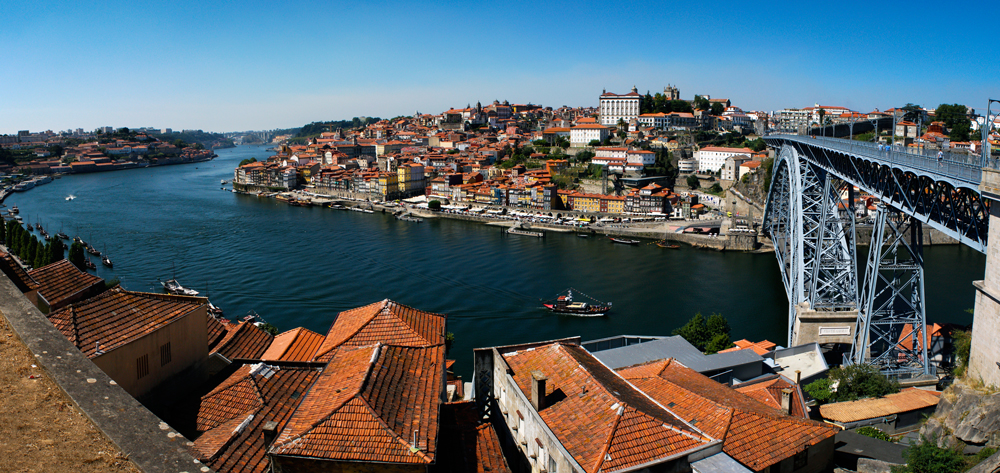
Panorama of Porto.

Panorama of Porto.

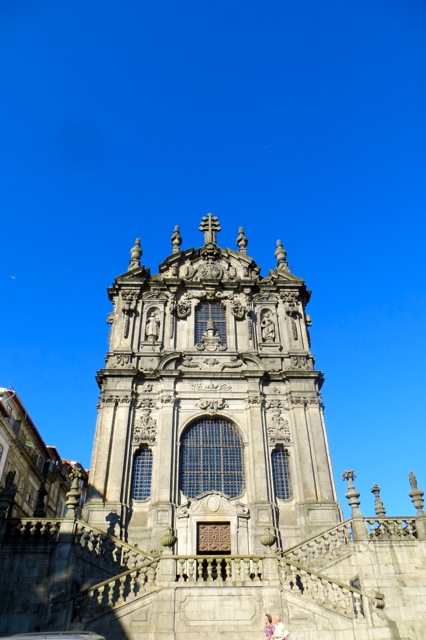
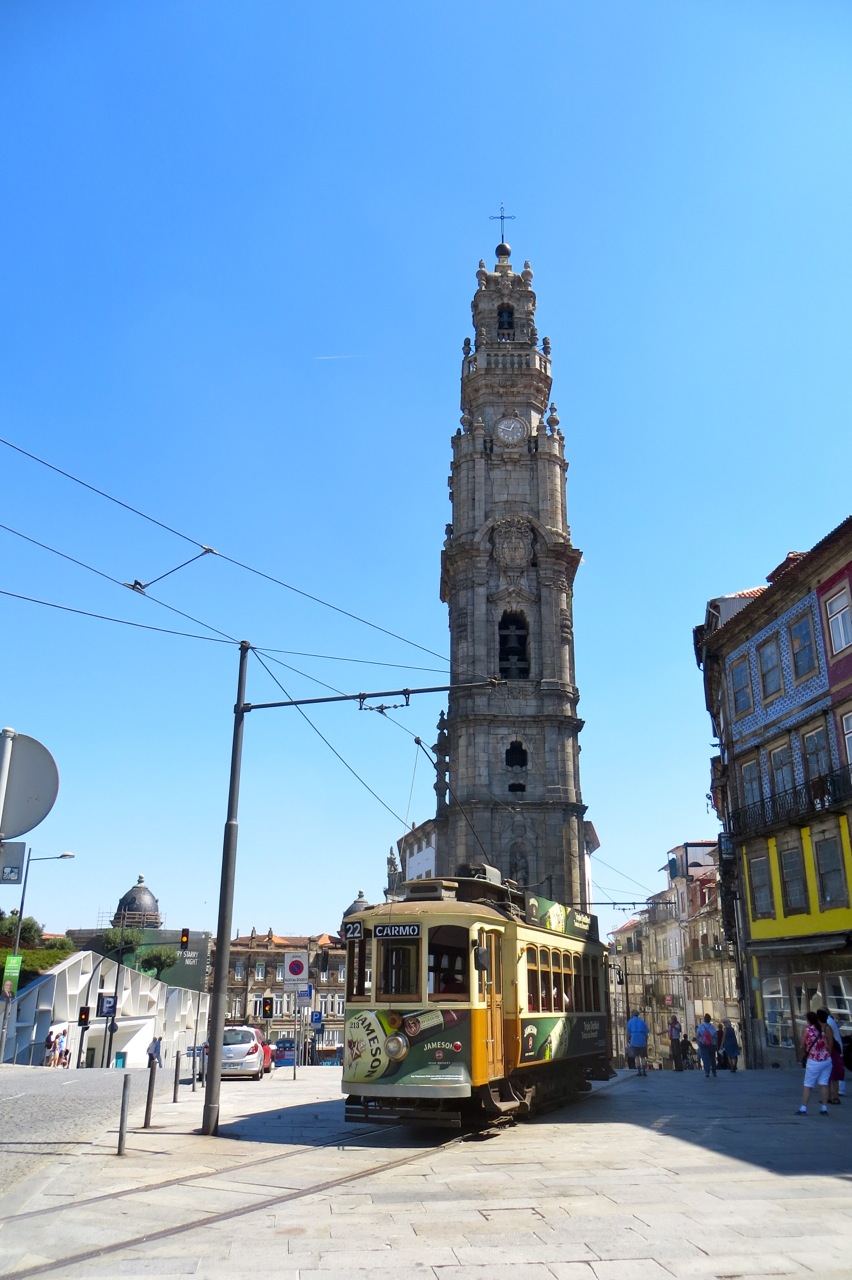
Torre dos Clérigos

Torre dos Clérigos

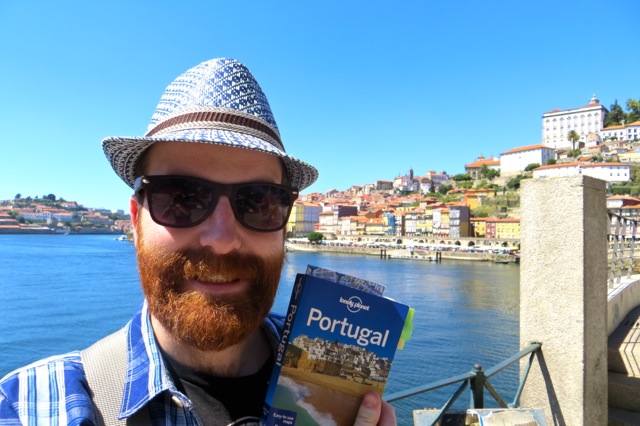
Yep, this is how I rolled.

Yep, this is how I rolled.

Douro river.

Douro river.

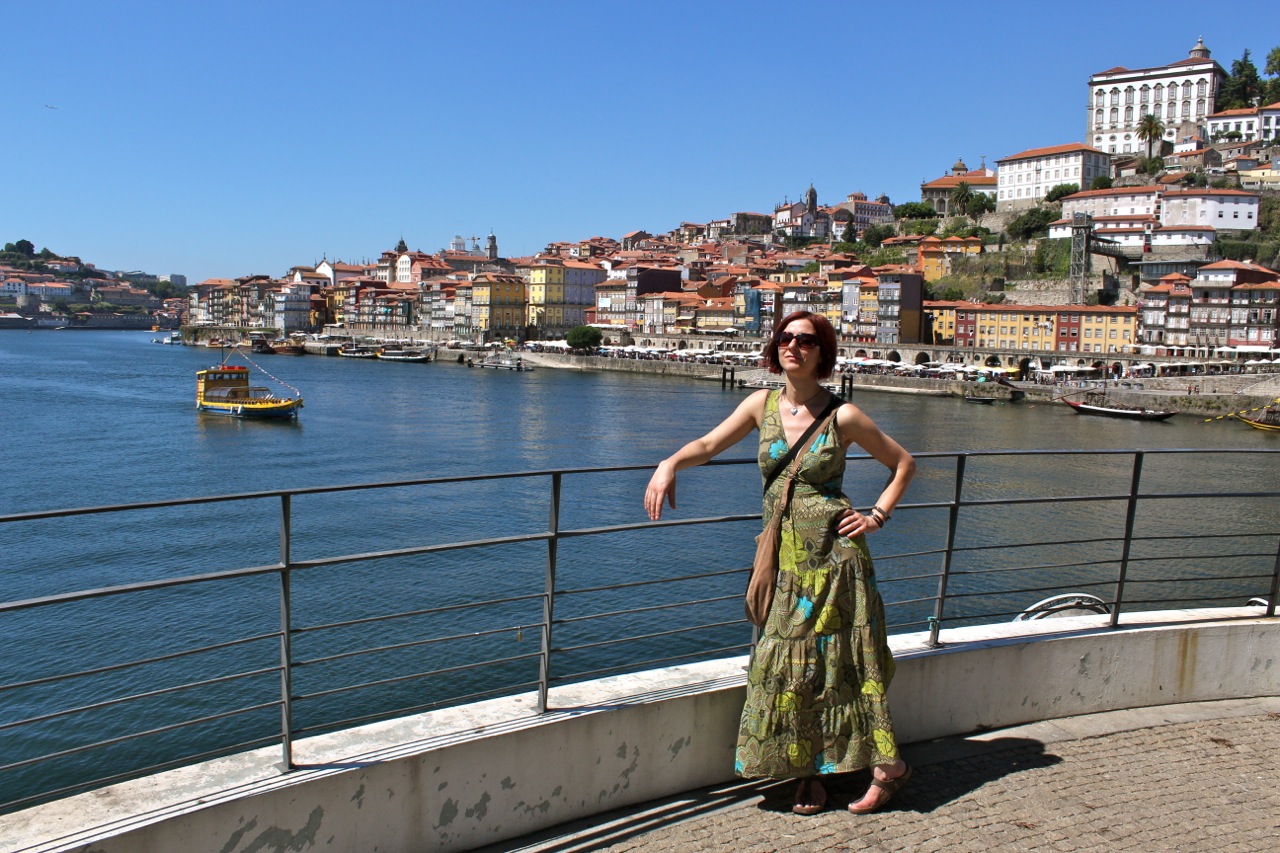
Gina & the Douro river.

Gina & the Douro river.

Porto’s historical centre is on UNESCO’s World Heritage list, first of many sites we are planning to see during this trip. This is what they have to say about it:

The city of Oporto, built along the hillsides overlooking the mouth of the Douro river, is an outstanding urban landscape with a 2,000-year history. Its continuous growth, linked to the sea (the Romans gave it the name Portus, or port), can be seen in the many and varied monuments, from the cathedral with its Romanesque choir, to the neoclassical Stock Exchange and the typically Portuguese Manueline-style Church of Santa Clara.

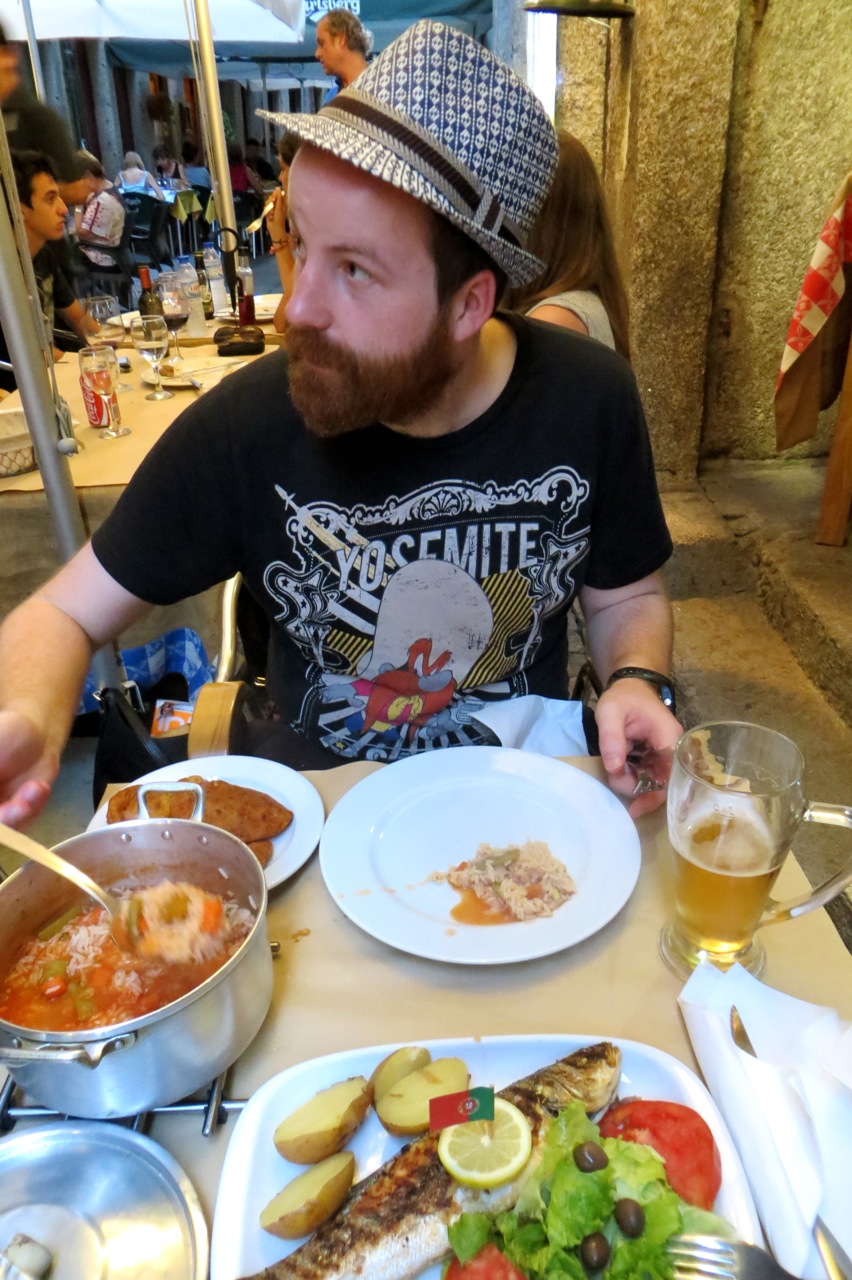
(rest on their web) After the walk we took showers and got a short much needed nap, before heading out for a nice dinner of seabass and cod, super fresh, and cheese cake (shared), super heavenly.

Fresh fish!

Fresh fish!


30
Aug 13

Dublin

Thursday-Saturday
For the rest of the working week my little routine continued uninterrupted and pleasant – sunny in Dublin. I got sweet little shorts for our trip and was then ready to go. On Thursday, we went for a delicious dinner in Skinflint, where I got awesome grape – goat cheese – rosemary combo pizza, and Iestyn got something with loads of garlic. Their lemonade is almost as good as mine, but no mint in it, and may be a tad too much sugar.

Brother Hubbard Coffee!

Brother Hubbard Coffee!

On Saturday Iestyn needed to get a few last bits for the trip, and we made it a day with going to see the “We’re the Millers” in the cinema – which I originally thought would be stupid but then my fav review guy gave it 80% so we went, and it was actually really funny summer film to see.
Dinner at Mushashi japanese restaurant was scrumptious, and afterwards we just rushed home to pack everything and get to bed early.
I also finished my book and packed The Red House by Mark Haddon for the trip.


28
Aug 13

Dublin

Moday-Wednesday
Iestyn had to go to work this week, so I just set on a regular schedule of:

  • Lie-in and reading,
  • Huge breakfast of oatmeal with chocolate, honey, yogurt, blueberries and strawberries + coffee,
  • Looking into the Portugal trip and deciding what to do,
  • Going to explore the town in the afternoon and meet Iestyn after work.

The weather is OK, mostly cloudy with some streaks of sun. On Tuesday we went for dinner to Pifko, where I had Gambrinus beer and nakladany hermelin (pickled brie-type cheese), not too bad considering it’s in Dublin, but paying €5 for Gambrinus is an abomination, it goes for like €1 in Prague and it’s prolly better there. Afterwards we went to meet the guys in Mulligan’s where iestyn tried to persuade me that some bizarro Icelandic beer is metter than any Czech beer, but obviously he just made a fool of himself. Truth told, he just likes the Viking picture on the bottle.
By now, there are two arsenic poisoning and some non-fatal shooting in the dark in my book. Who can be behind that?! Did they really mean to kill with the poison and failed or was that just a warning? I feel like a lot of people are not saying all they know!


25
Aug 13

Sunday

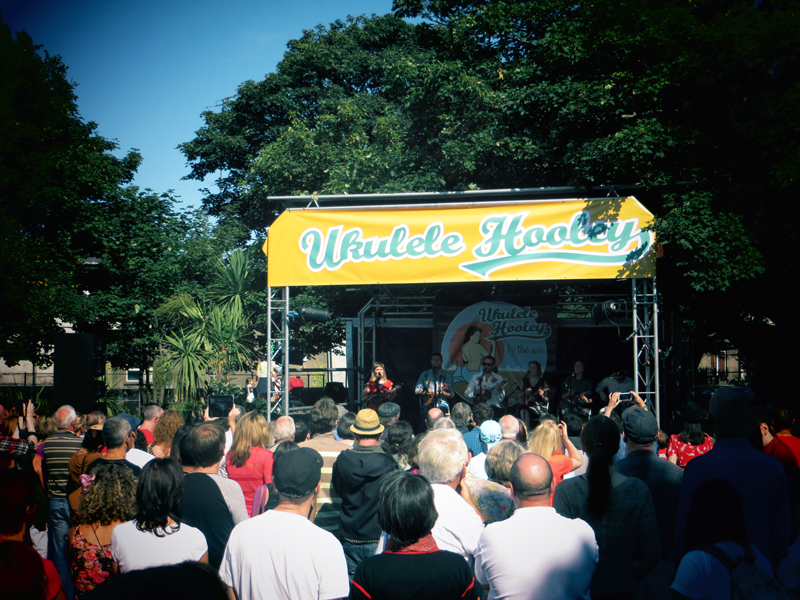
After a lazy Sunday lie-in and epic breakfast we went to town to meet Iest’s friends for a coffee and a joint trip to Dun Longlilong, where there was a Sunday fair going on in the park, along with an all-day ukulele music festival, in which one of the friend’s sister was playing.

02_Uke

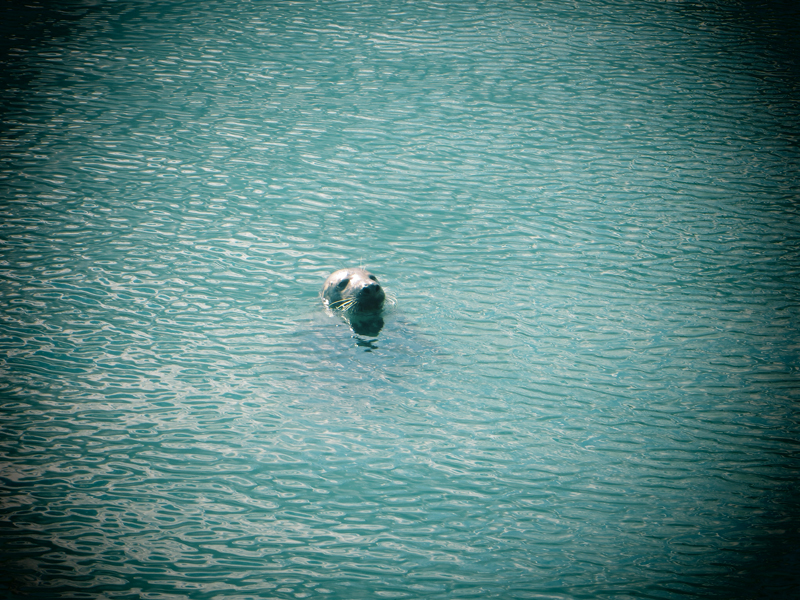
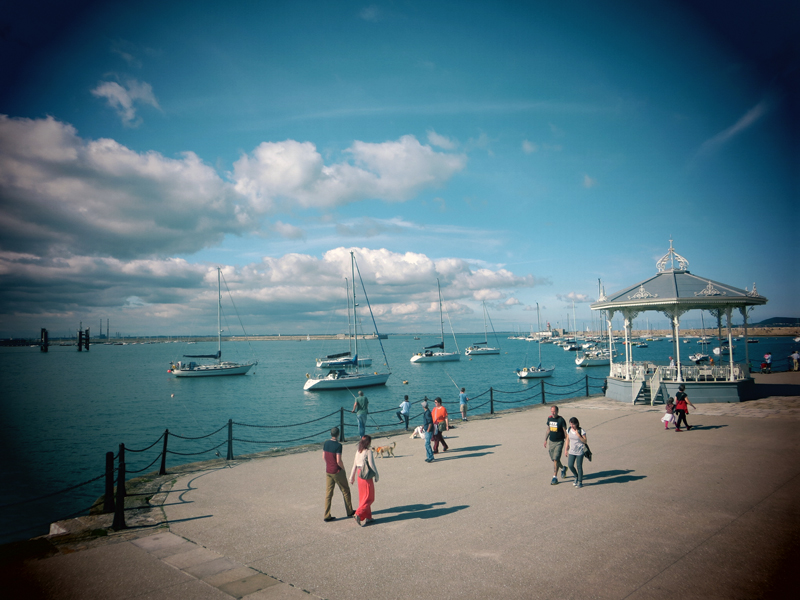
It was epically sunny in Dun Longlilong, a beautiful day for a fair and ukulele music! After we had enough of the fair, we went for a walk on the pier and watched boats and seagulls do their thing. We also saw a seal! Probably on a trip from Wales. Just sticking his cute little head out of the water.

04_MrSeal
03_Dun

After getting back to Dublin we bought tickets for Elysium in IMAX and killed the remaining time to the screening in Eddie’s diner with milkshakes and burgers (only Ryan and Tony for these). Elysium was an epic summertime Hollywood blockbuster, quite violent and not as good as District 9, but still quite entertaining if you didn’t think about it too much.

05_Dun


24
Aug 13

Vaycay time

Vaycay – well, it’s Europe-bound again, what to do. Iestyn only got like 10 days off in his new job, so it’s not really worth going somewhere further. Hesitating between Greece, Bulgaria, Macedonia, Portugal, we finally decided on Portugal because why not, they got surf.
I got the LP in the ‘burg but didn’t really have time to go through it before the vaycay. But that’s OK because I’ll first go to Dublin and look into it while Iestyn is still at work. So we just bought tickets and booked a car up ahead – flying to Porto and back from Lisbon. In between – the possibilities are wide open. I also bought a super-light summer sleeping bag, I hope I’m not gonna be cold. It’s a pretty colour though.

Saturday
I spent the most of the day at home, cleaning up a bit so that I don’t return to a huge mess, finishing packing, watering plants, going to the post office, etc. At 4pm I boarded the train airport-bound, and thus started my vaycay officially. I started reading my vaycay book on the train – I packed the “Case of the Drowsy Mosquito”, a case for Perry Mason, wonderfully old-fashioned and US-fashioned crime story. First edition from 1943, my copy of 1969 taken last year at the street book exchange in Liechtenstein’s capital Vaduz. I was a bit too early at the airport, which is still better than being late, had no problem with my carry-on bag (that might still come with RyanAir later),and generally experienced no drama.
It was super cold and rainy in Frankfurt, which made me question my decision of not taking any shoes with me on the vaycay (only flipflops and sandals), but only a little bit and for only a little while. After a non-eventful flight next to a family with a first-class brat of a child, I arrived in Dublin at about 10pm, and Iestyn was already waiting for me. Iestyn’s friend Matt was on the same flight but given my below-average memory for faces I didn’t recognise him, and only said hello to him in Dublin when Iest did the facial recognition for us.
We took the bus home, gobbled up a “slice” of pizza each on the way and arrived home mightily tired. I had pressies waiting for me – a pretty map of Snowdonia trails designed in London tube style and coconut chocolate too. Also a beautiful card with a cat and weekend Guardian for my upcoming Sunday morning – woohoo!


11
Aug 13

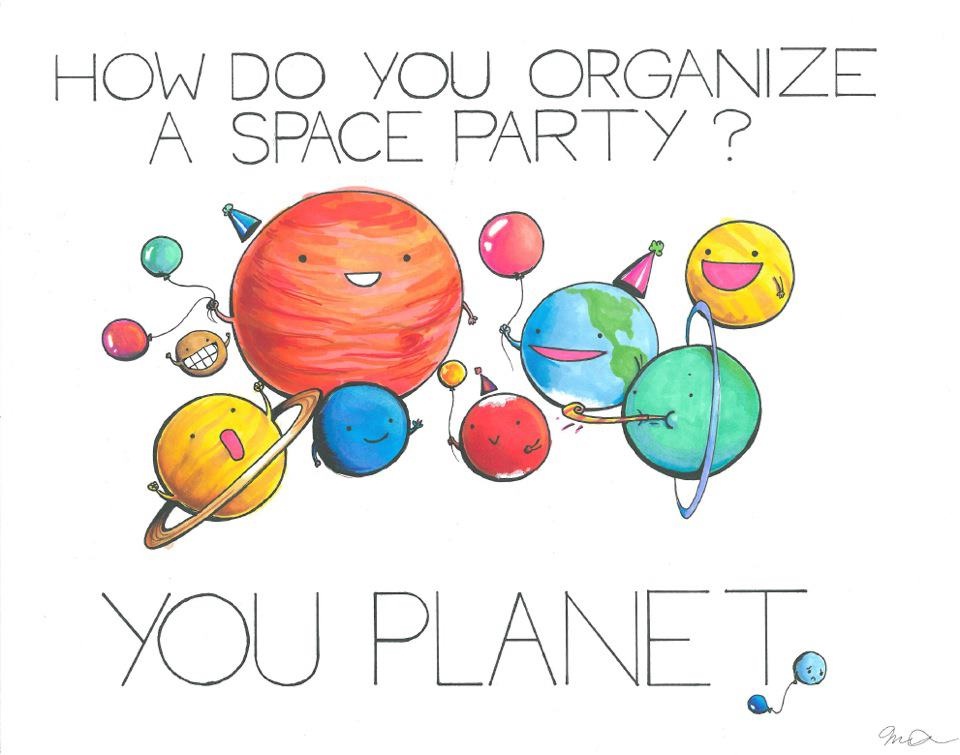
How do you organize a space party?

You planet!

oh poor Pluto