19
Jun 11

Strasbourg

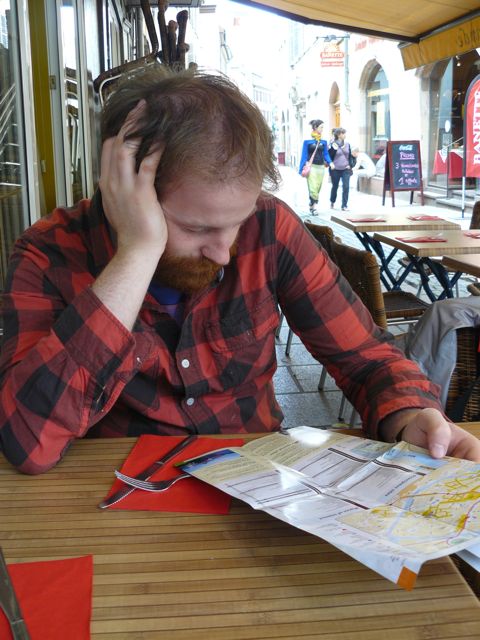
We just got our Henry navigator last week, so we decided to try him out, and went for a day trip to Strasbourg, even though it looked like rain in the morning. Henry was not deterred though, and bravely got on with the route. He was really good at it too, knowing all kinds of detail and what’s going on in the world. Unfortunately, the cigarette lighter in the car did not work so he was not getting juice, and by the time we got to the parking, he was practically dying.

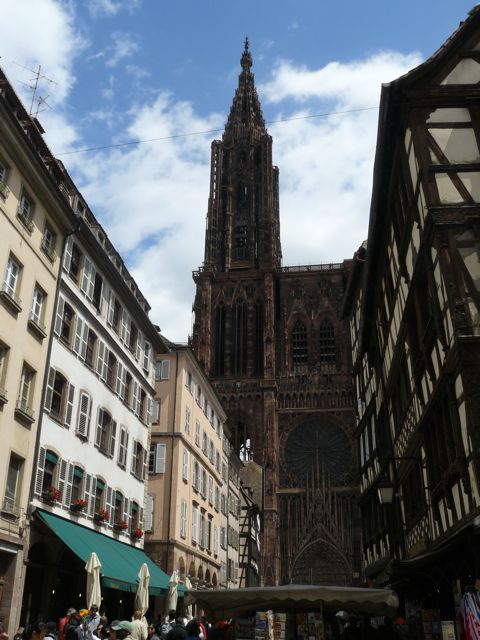
Anyway, he got us to an award-winning parking lot right in the centre (yes, the award was on display there! you could study it whilst listening to nice soothing sea-sound music that was playing in the corridors to repel homeless people and junkies from inhabiting the lot, thanks to which it did not smell of piss, and totally did deserve the award just for that. The disturbing imagery on the walls was probably there for the same reason.). From there dear Henry gave it a shot to get us to the nearest tourist information centre, but died on the way completely. Fortunately, it was very easy to find just by the cathedral.

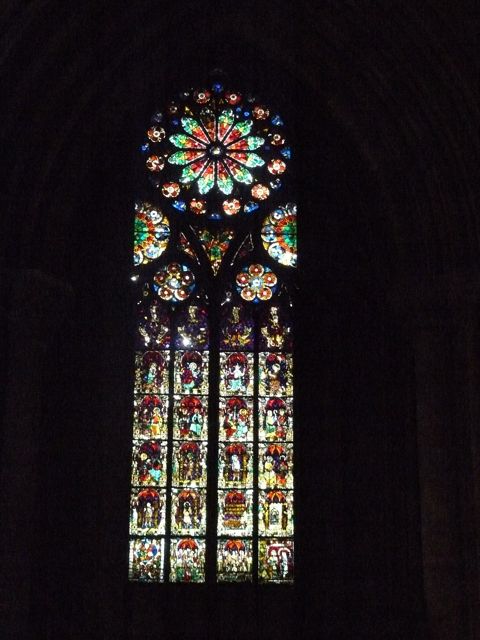
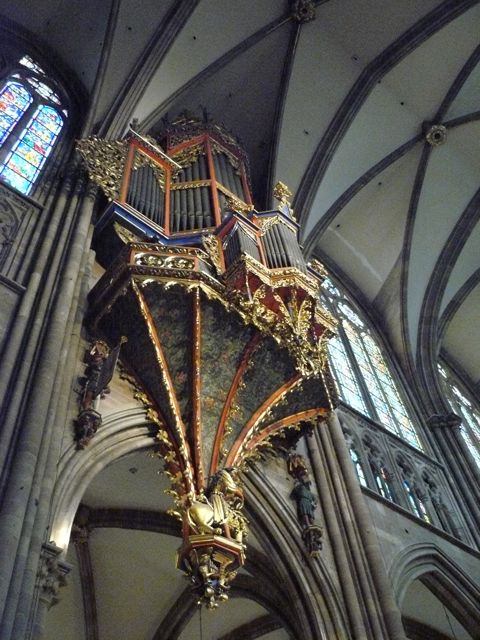
The cathedral was just like any other, I wanted to buy a Jesus fridge magnet, but Iest did not let me. It had a nice big organ inside, and funky windows.

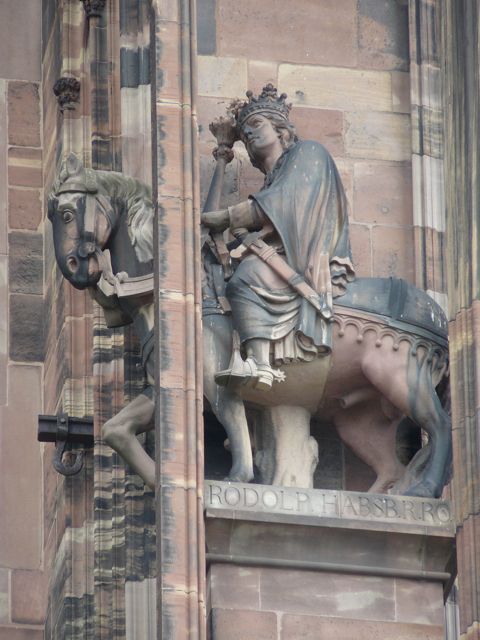
On the outside, the cathedral has elaborate decorations, for example this statue of Rudolph von Habsburg, which is weirdly and unsettlingly out of proportion with his legs looking quite midget-like; however, the schlong of the horse is proper.

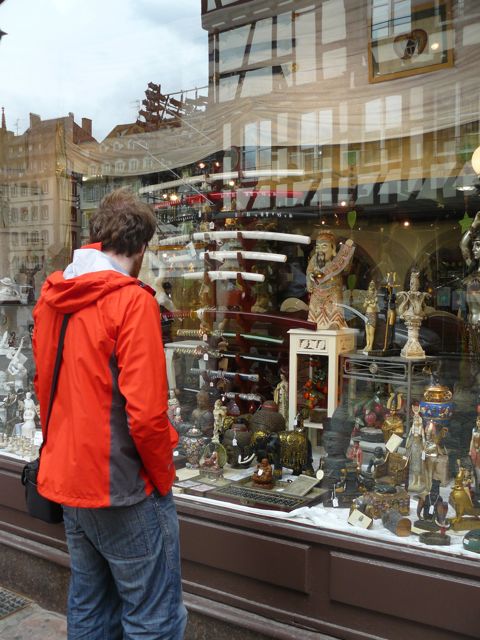
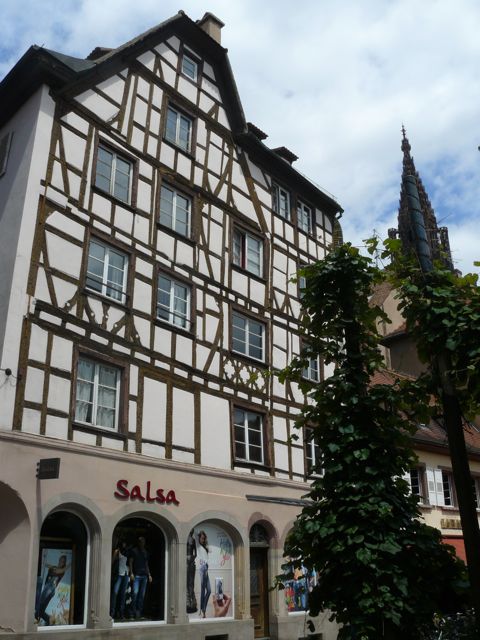
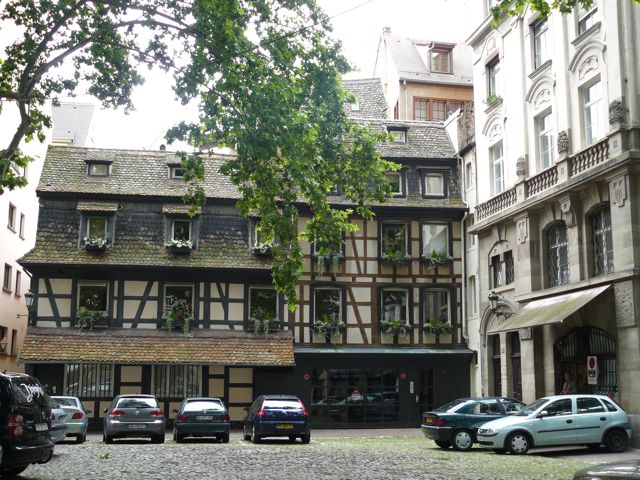
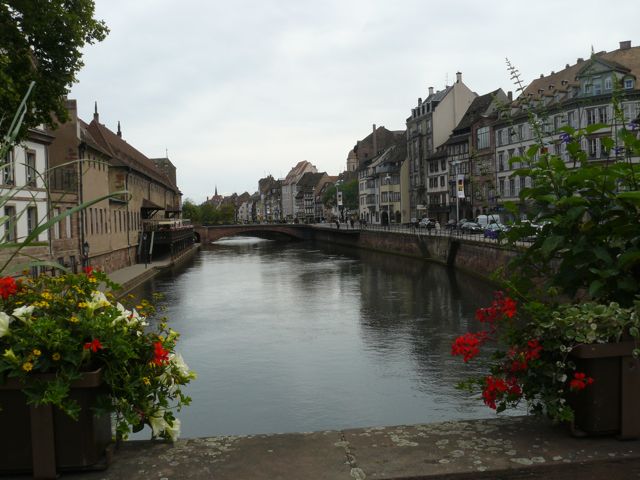
The weather was nothing special but at least it was not raining, so we marched on. Strasbourg turned out to have many pretty houses, with cute rooftops and flowers and tiny stores, and was generally pretty nice for a walk. Unlike Freiburg, Strasbourg is also a town with a little bit of edge, hidden nastiness, immigration tensions, and Hotel Central. Good thing that they are selling Hattori Hanzo swords everywhere, the locals probably need them often.

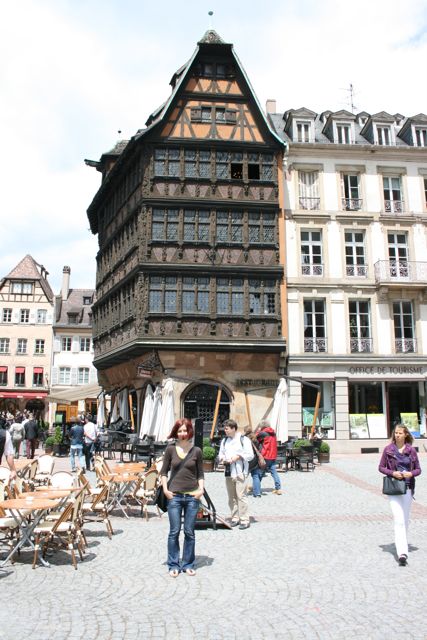
This is me in front of what our little guide calls the prettiest house of Strasbourg, La Maison Kammerzell.

We had a lunch at a little creperie with yum crepes, but grossly incompetent service, which saved us money on tips.

Altogether, it was a fun day, and the weather was not nearly as bad as what it looked like in the morning. We had a little bit of a problem getting out of there, as Henry was dead and we did not really remember any rout names, but we managed quite well at the end.


24
Apr 11

Aha – Todtnau, Black Forest Walk

Day 1. Aha – Feldberg (Red line on Map below)

Over the Easter weekend, we did our first epic hike of the Black Forest. We caught the train from Freiburg to a little village called Aha, on the shores of Schluchsee lake, South East of Freiburg. It was a really pleasant trip on the train, enjoying the scenery, and looking at the locals eating sweets.

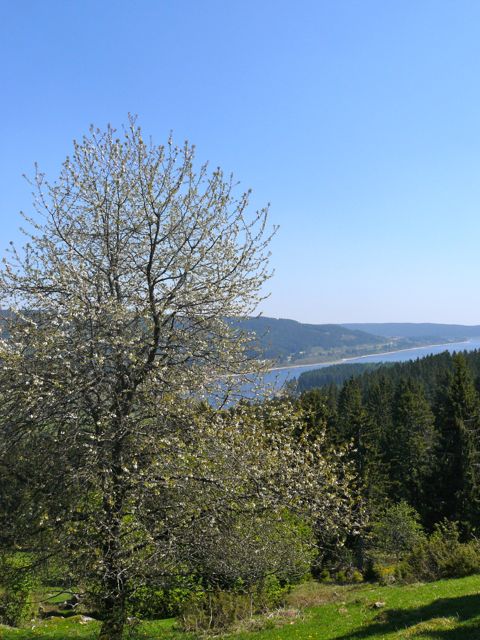
After a quick lunch on the lake, we headed West, around the Northern shore of the lake, and into the Wilderness of the forest. After ascending for a bit, we were rewarded with a beautiful view of the Schluchsee, and that lovely feeling of Spring, as the trees were starting to bloom.
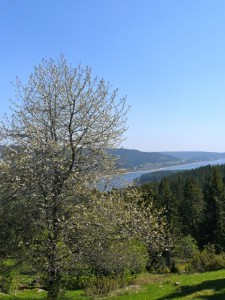
Schluchsee

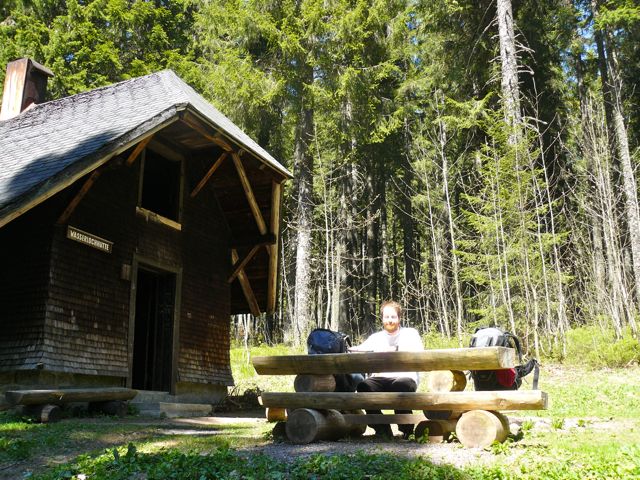
Break at Rosshutte

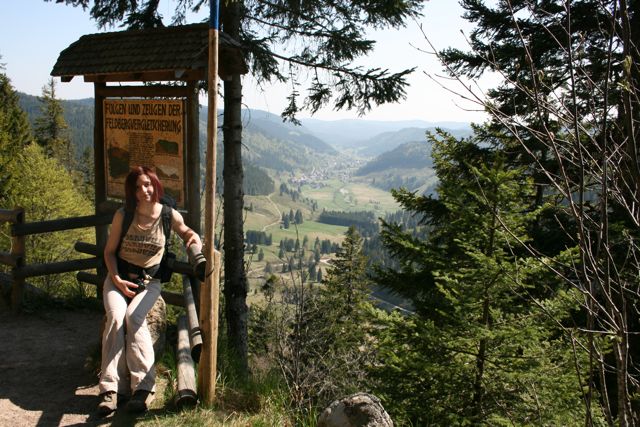
After gaining some height, we stopped at the Rosshutte for a quick break, to read the map, and get some water from a wee spring that was situated behind it. From reading the map, we decided to take a lovely walk up to the highest peak in the area, seeing as it was a viewpoint. This peak was called Zweiseenblick [and as the German enthusiasts among us know, this actually means two-lake-view]. After a joyous walk, we reached Zweiseenblick. It was quite full, it was almost a Tourist Highway, as there was a good group of people at the top, enjoying the views of the Black Forest. We decided not to stay long, and make our way towards Feldberg.
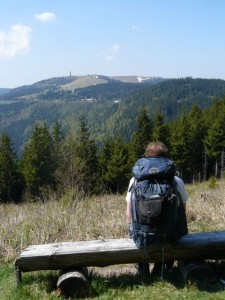
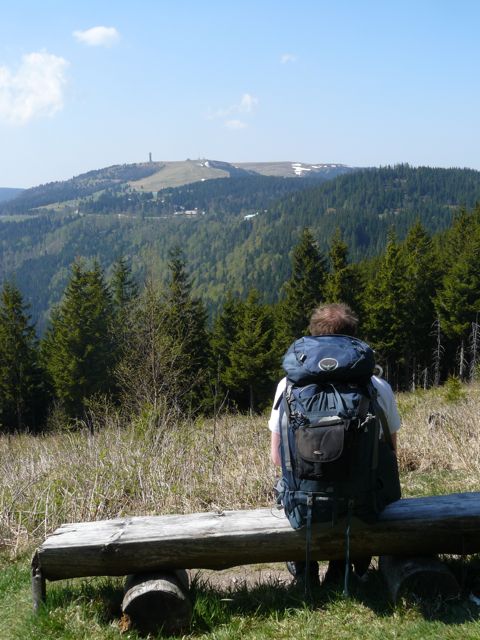
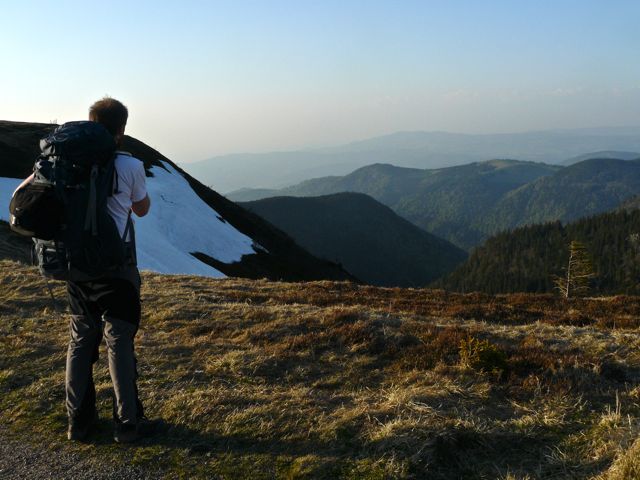
Me looking towards Feldberg
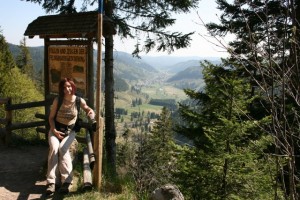
Gina, her Deltoid and the Menzenschwand Valley

Along the way, there plenty of photo opportunities. We saw Feldberg (1,493m) with it’s towers, (which was our destination on day one), and the beautiful Menzenschwand Valley, where Gina showed me how strong she is, (On the photo above, check out her Deltoid!! She’s not even flexing!!) where we can see the town of Hinterdorf – plus a description of how this glacial valley came to be. All in German though.

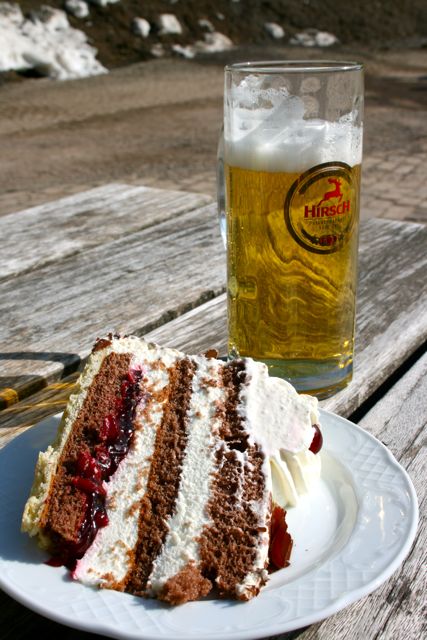
We made speed, and headed towards Feldbergernof, which is a small, odd place. It’s geared towards the skiers, and snowboarders in Winter, as the slopes of Feldberg above is perfect for beginners for skiing – but as the snow was just about, all gone – it was full of tourists, who was there to enjoy the views. We headed to the cafe, and I got myself my First Black Forest Gateaux since my arrival here. It was very good, and washed down with some beer.
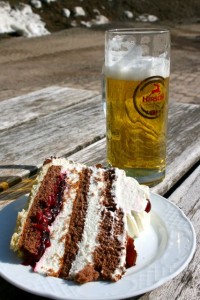
Gateaux a Beer

We headed up to the summit of Feldberg, the highest summit in the Black Forest. Here, on a good clear day, you can see the whole of Alps, and able to make out the Eiger, Jungfrau and even Mt. Blanc. Unfortunately for us the haze was in, so we couldn’t see beyond the Black Forest – but it was still very nice. There was still a bit of snow nested in the shadows of the sun, hidden within folds of the mountain, but the views of the Black Forest were beautiful.
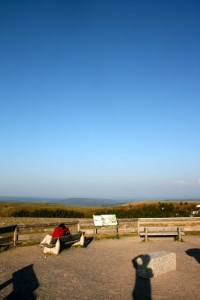
Feldberg Summit (1.493m)
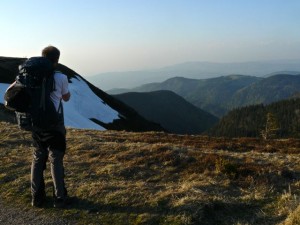
Black Forest

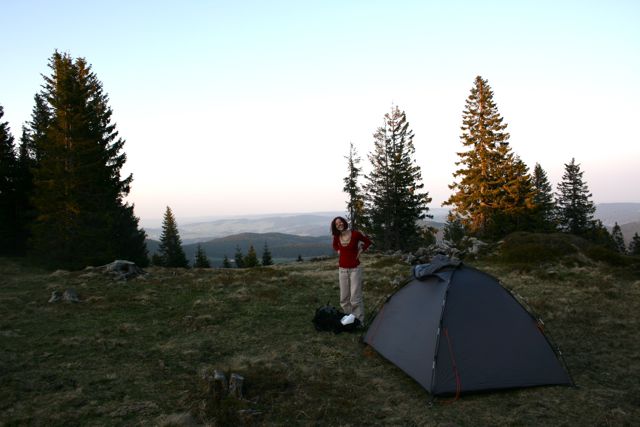
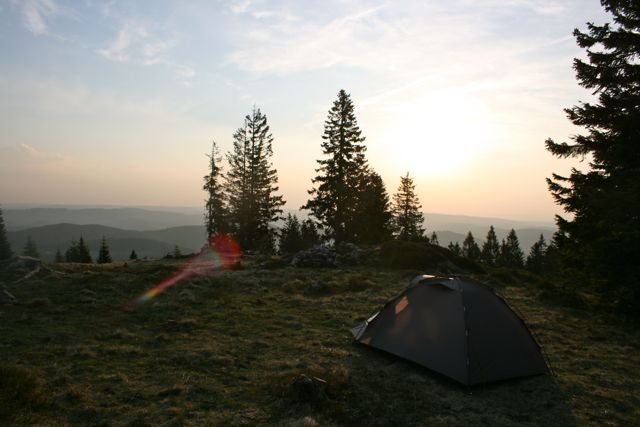
We decided to pitch our tent just off the summit, overlooking the Feldsee lake. A pretty wee circular lake, nested right at the bottom of 300m cliffs, to the East of the summit. According to legend, there’s a ghost that spooks the lake, shouting to hikers “Hey, you! You’re going the wrong way! If you want to go to Feldberg, you must take the different path!” If you look at him then, the spell is broken. No-one knows however, if this rewards the spirit and set him free. For dinner that evening I had some noodles and mushroom sauce, and Gina didn’t eat any, she just went to sleep after all day fun in the sun. Gina fell asleep quite fast, but i played around on the top, looking at the stars, and taking some photographs. As I headed into bed, I realised that I’d forgotten my sleeping mat at home. Luckily for me, it wasn’t very cold that evening, and I managed to sleep ok.
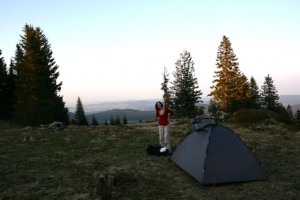
Gina at the Camp
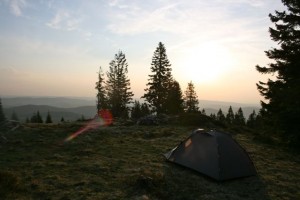
Morning at Camp

Day 2 Feldberg – Todtnau (Blue Line on Map below)

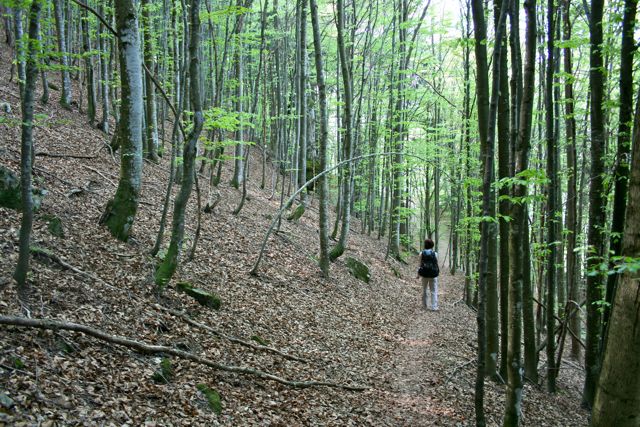
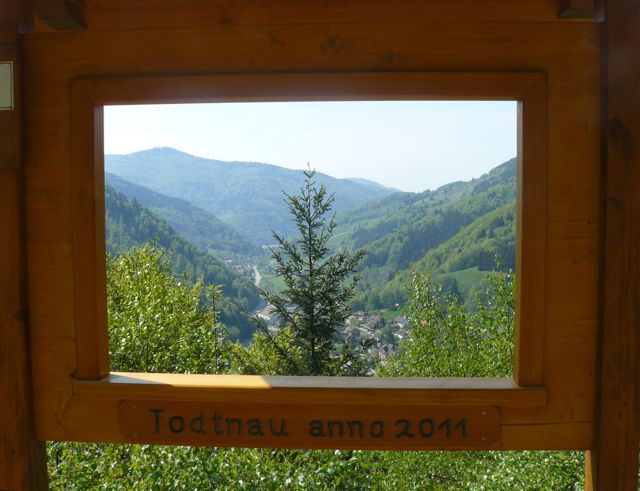
We woke up super early, and made our way back up towards the summit of Feldberg. There wasn’t a soul around, and we were in for another beautiful, hot day. The trek was mostly contouring around Stubenwassen, making our gentle downhill approach to the village of Todtnau. It was a good mornings hike, through very pretty forest, and some un maintained trails, resulting in us taking the wrong path, I was pretty certain there was a Map Black Hole at the point, as nowhere made any sense on the map. Anyhoo – we managed to get back on track, and found a nice picture frame, sitting nicely above Todtnau.
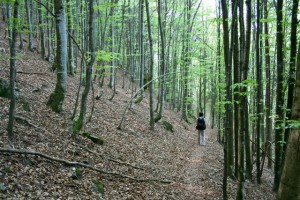
Pretty Forest
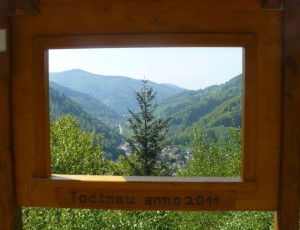
Todtnau

Pretty much all the way on this second day, only one thing was on Gina’s mind – Twister Ice cream. So after arriving (after what seemed like an endless downhill from the picture frame), we came to the sleepy Village of Todtnau, where there was a nice market going, which felt really nice. We had some ice creams, (they didn’t have Twister unfortunately) and figured out how to make it back to Freiburg via a bus that was going directly there in an hour or so.
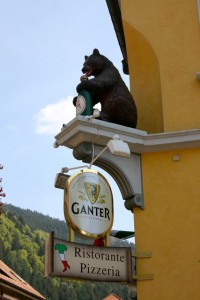
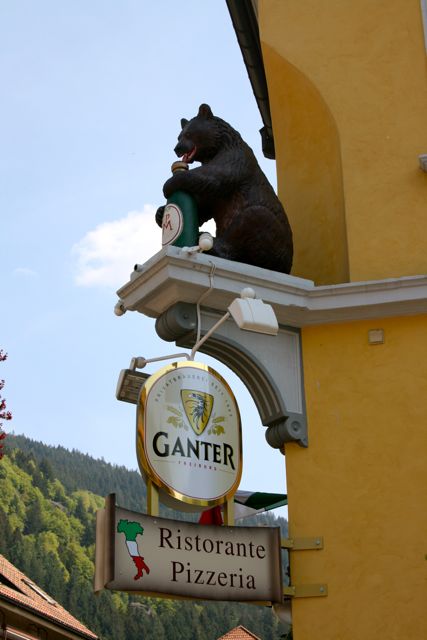
Pub in Todtnau
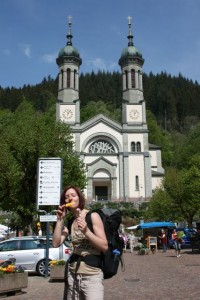
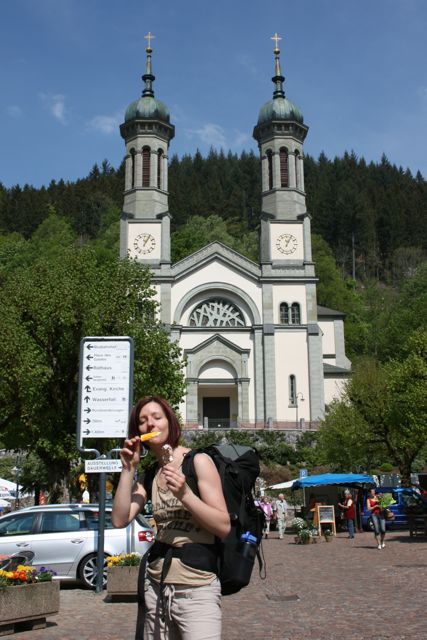
Ice cream, Gina & Church

It was a lovely trip, and a great first proper hike in the Black Forest. It’s such a beautiful part of the World.

Here’s our route marked out on Google Maps. If you can’t view it – please let me know.


View Black Forest Walks in a larger map

15
Jan 11

Capel Curig

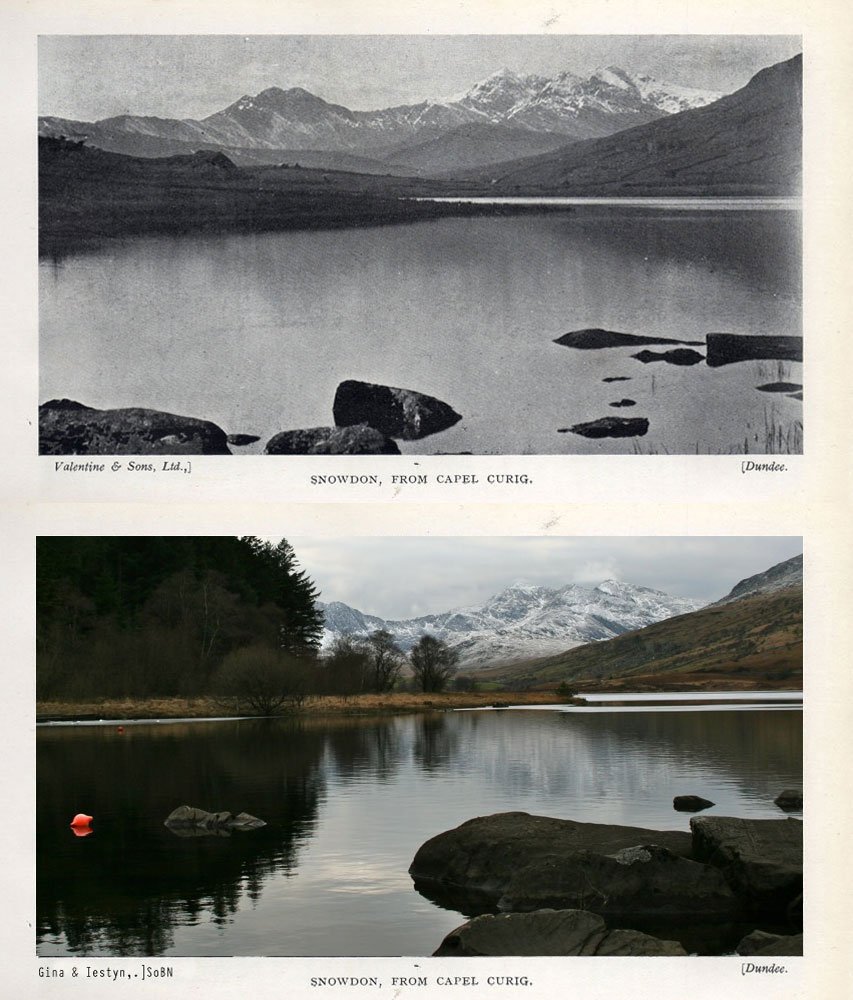
Snowdon, from Capel Curig

Capel Curig, beautifully situated on the Shrewsbury and Holyhead road, is one of the oldest tourist resorts in the Principality. The village is about 600 feet above sea-level and has a bracing air. It is a capital resort for anglers, for, besides the lakes at close hand, there are other good fishing waters not far away, and it is much frequented by climbers and walkers, since it is one of the handiest centers for Tryfan, the Glyders and Snowdon. The church is dedicated to St. Curig, a British recluse; hence the name of the village.

There are first class hotels, and accommodation can also usually be found, except in the height of the season, in one or other of the cottages. The village is strung along the Holyhead road for nearly two miles at the point where the Beddgelert and Llanberis road strikes off Westward. Buses pass through it on their way to or from Betws-Y-Coed or Bangor.

From Capel Curig the Holyhead road rises steadily until it reaches an altitude of 1,000 feet as it passes between the mighty Tryfan (3,100 feet) and Llyn Ogwen, the latter famed for trout and eels. At the Western end, at Benglog, is Ogwen Cottage, a haunt of climbers and anglers, and then the road begins the long gradual descent of Nant Ffrancon, “the Vale of Beavers”. But to be properly appreciated the pass should be ascended.

Capel Curig is indeed a nice wee place. It’s funny how these books always mentions the fishing potential of places. Nowadays, you don’t see much people fishing in the Llynnau Mymbyr, or any other lake for that matter. I don’t think much has changed in the Village since the days of the Red Book, as it’s still roughly the same size as they describe, but today it’s a hub for Mountaineers, as Plas-Y-Brenin is located on the road Westward towards Llanberis.

Picture wise – We have indeed managed to locate the correct spot, but there’s now an immense amount of trees growing on the South Bank, which is called – Coed Bryn Engan.


12
Jan 11

Llanfairfechan

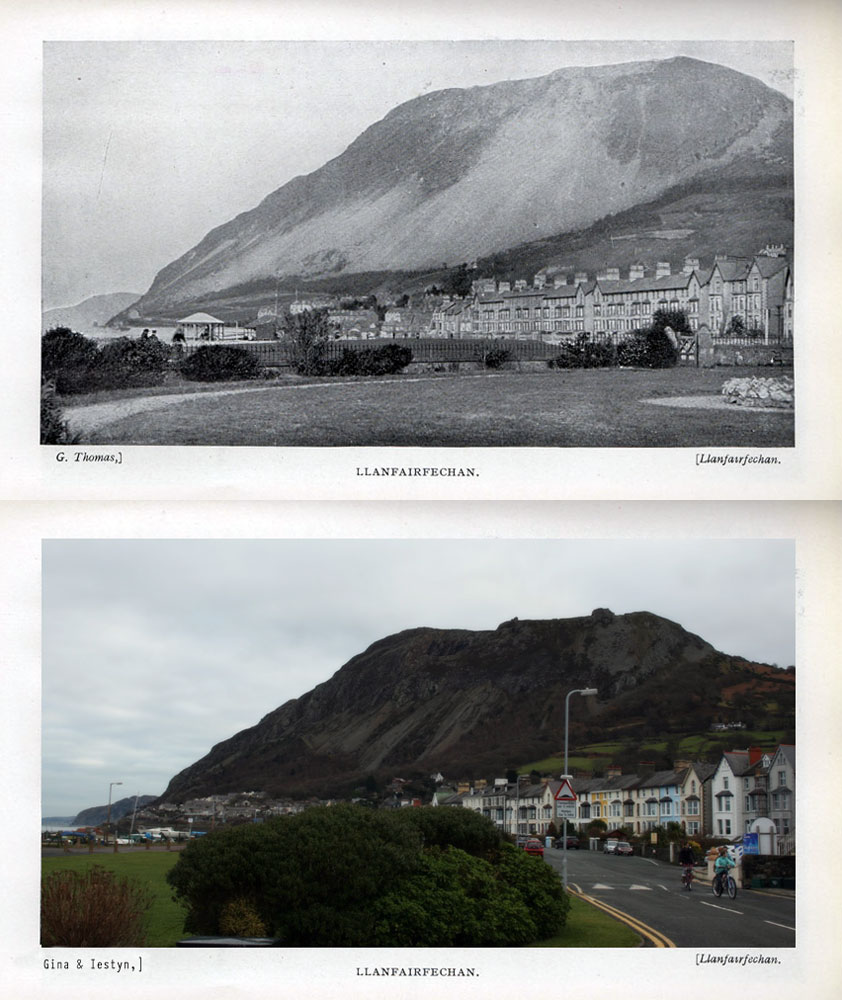
Llanfairfechan

Population – 3,638

Post Office. – In village; branch office towards eastern end of Penmaenmawr ROad.

Tennis at Victoria Gardens, towards eastern end of the Promenade, and at the Receration Ground, near Moel Yacht Pond. Tennis tournaments are arranged weekly during the season.

In it’s brief but merry course to the sea the little Afon Llanfairfechan dashes first through rocky, fern-clad gorges; then through the gradually widening valley in which the orignial village of Llanfairfechan stands and finally, passing under the coast road, it rattles past the modern resort called into visitors who appreciated this airy, healthy site on the verge of the sea yet within a stone’s-throw of the mountains. This charming contiguity of intrests is well illustrated by the stream which bubbles beside the main street of the village, for although its source is some 2,000 feet above the spot where it runs into the sea, yet it’s length is scarcely three miles. The eastern side of its valley terminates abruptly in the pominent headland know as Penmaenmawr Mountain; it’s western side falls away gradually in green, wooded hills above which giants of Snowdonia raise their heads to the sky.

The hills sufficiently far inland for thei majestic proportions to be seen and admired without the observer being oppressed with their too immediate proximity. Yet they are near enough for the ascent to begin at the door of the village post-office, and from any of them views of great beauty and variety may be had.

As the site has a gentle slope towards the sea, no great amount of moisture can remain upon the surface. Consequently the air is dry and bracing, and through the shelter afforded by neighbouring hills the climate is genial, as is demonstrated by fuchsias, myrtles, and other tender plants and shrubs – including the pale butterwort, a plant very sensitive to cold-flourishing all the year in open air.

The Sea Front at Llanfairfechan is unpretentious, but the bathing is safe and good, and the wide expanse of firm sand revealed by low tide forms a wonderland for children. There is a Green on which various games may be played and at either end of the Parade are public Tennis Courts and Bowling Green. A feature of even greater interest to the juvenile navigators – and their male relatives – is the Model Yacht Pond. It is regularly used by members of Liverpool and Wirral Model Yacht Clubs, and regattas are orginized during the season.

A feature distinguishing Llanfairfechan sea-front from many another is the View:-not the customary wide expanse of sea, but a charming panorama extending from the Great Orme’s Head across to Puffin Island, with it’s striped lighthouse, and then along the variegated coast of Anglesey to the tall roofs of Bangor, Penrhyn Castle rearing its battlement tower above the trees to the south-west, and then the eye travels round by the hills above Aber to remote Foel Fras and so round to the familiar scree-strewn face of “our mountain”.

It seems like Llanfairfechan, back in the day was the place to be! There’s an epic entry for the village in the book, and this is just an extract. I never thought of Llanfiarfechan to be a good place to be when going hill-walking, but I suppose the book is right, as from Llan you’ve got the whole of the Carneddau coming into play, before en counting the Snowdon massif. Very interesting to read this on Llanfairfechan. (Our North Wales – Northern Section book by Ward Lock & Co’s is dated 1930-1931)


07
Jan 11

Abersoch

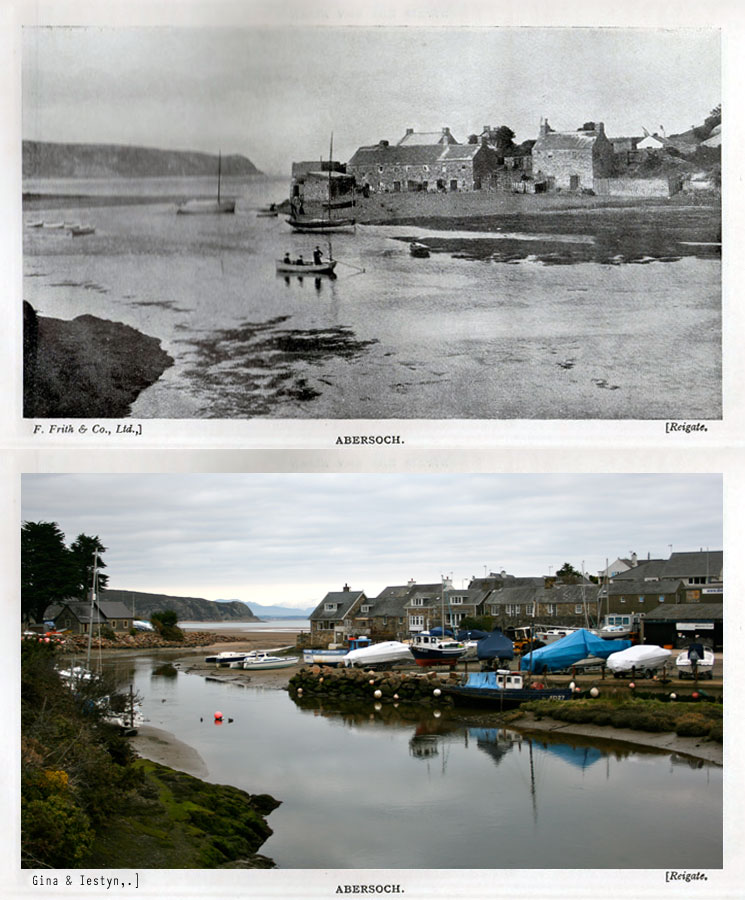
Abersoch

Golf – 9-hole course. Season tickets: gentlemen 21s; ladies 10s. 6d. Monthly: gentlemen 15s; ladies 10s. Fortnightly: gentlemen; 10s.; ladies 7s. 6d. Weekly: gentlemen 7s. 6d; ladies 6s. Day: gentlemen, 2s; ladies 1s. 6d.

Abersoch, a small watering-place 3 miles from the Nanhoron Valley, stands on the shore of a pretty little bay. The extensive sands afford good bathing, but the tides recedes to a great distance. From full to half-tide, swimmers will find deep water under Benar Hill. Visitors must beware of being surrounded by the tide at this point. Those who care to spend a day fishing for mackerel may make arrangements for accompanying one of the numerous roomy boats belonging to the little port; but, on account of the currents, it is not advisable, even for skilled yachtsmen, to venture alone beyond the bay.

In the stream from which the village takes its name there is good trout fishing, execpt in dry seasons. Less than a mile from the shore are St. Tudwal’s Island and Lighthouse. Boats to visit them can be obtained.

Abersoch can be reached from Pwllheli by taking the tramcar to Llanbedrog and walking 3 miles.

This, so far is the most changed picture we’ve come across. The only thing (apart from Mynydd Tir y Cwmwd – the headland in the background) we had to go by was the two chimneys coming up from the furthest house, centre of the image. Everything else is totally different, and going from the text – grown quite a lot too!

I love the fact, that the only way to reach Abersoch back then, was walking! In today’s World, no such thing exists, shame really.


06
Jan 11

Llanberis Pass

Llanberis Pass

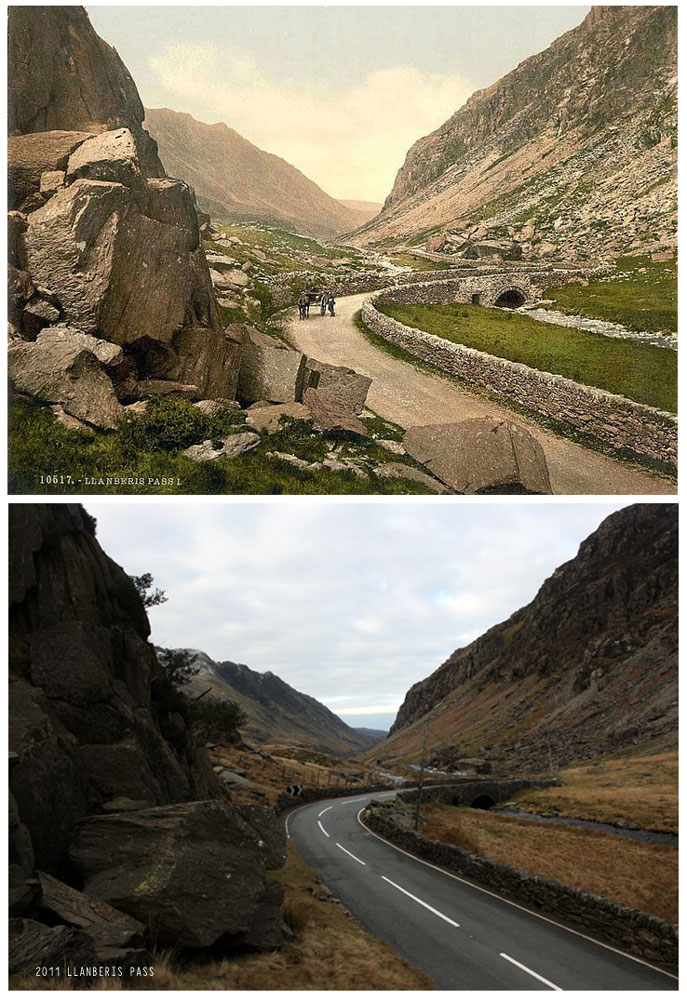
From the ‘resting place’ we begin the descent of the -Llanberis Pass, the finest motor mountain-road in Wales. The precipitous and craggy sides of the noble mountains press closely on each other and shut in the narrow pass. Shattered masses of every form, which have fallen from the heights, lie in strange confusion, and amid them the  Seiont, rushing and roaring, hastens its descent to the head of Llyn Peris.

Some two miles farther we reach the picturesque village of Nant Peris, formerly knows as Old Llanberis, and soon afterwards are running by the side of Llyn Peris, on the opposite shore of which are the Dinorwic slate quarries. Then we get abreast of the remains of Dolbadarn Castle. The consist only of a round tower, which probably does not date back many centuries, but the site is said to have been held by the Prince of North Wales in the sixth cantury. Beyond the ruin we arrive at the Royal Victoria Hotel, in modern Llanberis. At the foot of the hotel grounds is the lower terminus of the Mountain Railway.

Skirting Llyn Padarn, en route for Caernarvon from Llanberis, the remarkable manner in which the slate quarrymen have terraced the mountain slopes opposite is well seen. Then on the left the Cefndu wireless station comes in view and shortly after Carnarvon is reached.”

I’d sure have to agree that this road is the finest ‘motor mountain-road in Wales’. It sure is awesome. It’s my second favourite mountain route in the UK, second only to the epic A82 running through Glen Coe in the Scottish Highlands.

The Pass itself hasn’t changed much since the good old days, only a few big rocks been moved, but apart from that, it’s in top shape!


26
Sep 10

Freiburg

For reasons that were completely beyond my control I had to leave my beloved London, and move to a much smaller town (technically, it’s actually a city, according to Iest’s definition of a cathedral presence) of Freiburg in southwest Germany.

Having spent my first few weeks here, I think it’s time to list the things I like about it.

1) Freiburg has a very friendly feel to it, people are generally very nice and helpful. The city is very green, not only thanks to its awesome location just on the foothills of the Black Forest, but also in lifestyle – it’s the most bike friendly city I’ve ever lived in. (And my bike is awesome too, and probably will deserve a post on his own.) Also, it is the sunniest city in the whole of Germany, and is right by the French and Swiss borders.

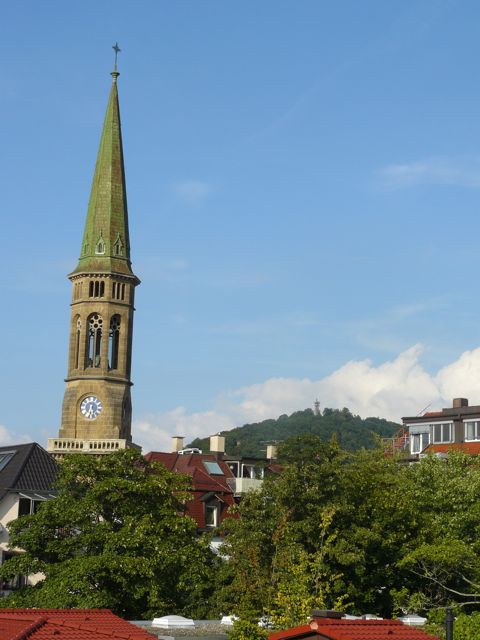
This is the view from my balcony.

My view

Continue reading →


20
Sep 10

Bangor


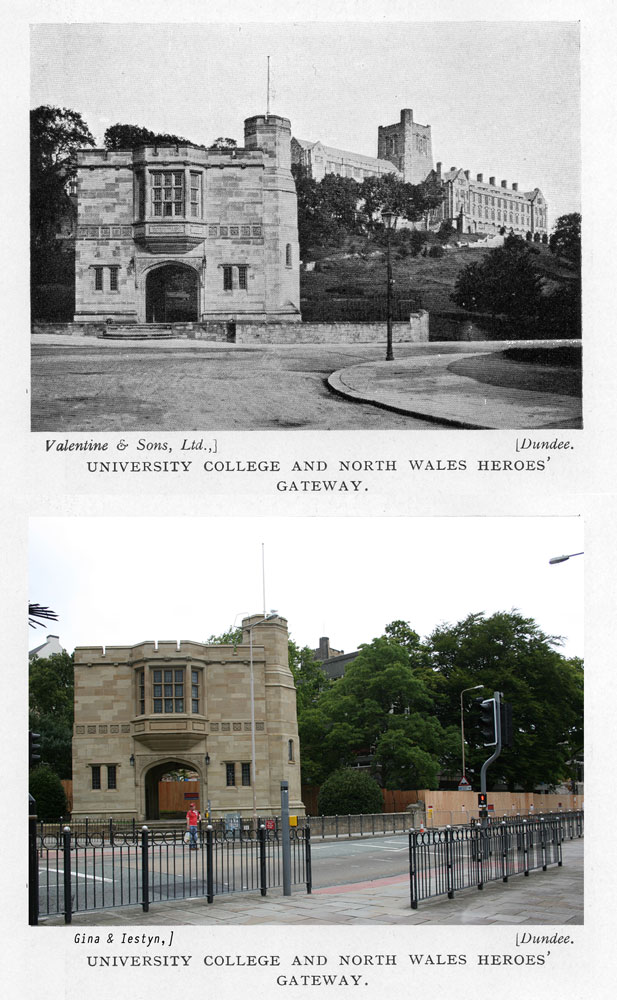
North Wales Heroes' Memorial Archway

Bangor, situated on the Southern coast of the Menai Strait, is one of the most ancient cities in Wales. It’s authentic history begins with the erection of a monastery about A.D. 525, by Deiniol, who became the first bishop of the diocese. The name is by some authorities derived from Ban Chor “the high or superior choir”, the early religious communities having been called circles or choirs, while those which exercised jurisdiction over the less important communities around them were distinguished as high or superior choirs.

In Deiniol Road stands the North Wales Heroes’ Memorial Archway, a Memorial to all the men from North Wales who fell in the Great War. The name of every man from North Wales who fell in the Great War (they numbered 8,500) is inscribed on oak panels in the room above the beautiful Tudor archway. It is one of the most impressive War Memorials and the panelled room, with it’s bronze doors, is particularly worth a visit.

Well, I never knew that this Archway was a memorial for the Great War. I used to drive pass this, even walk under it every week, and never once stopped to look at it, and see what it was all about. It sounds quite impressive inside, I wonder if it’s still open to the public?!


18
Sep 10

Scottish Panoramas

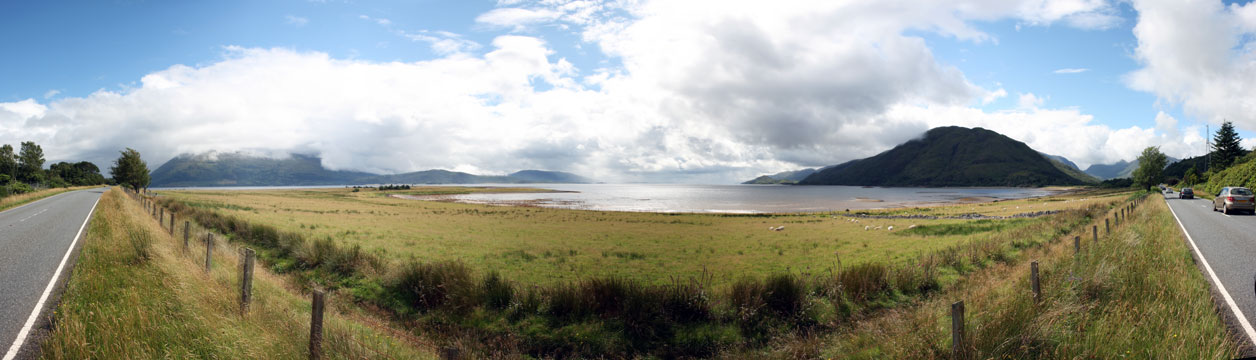
Everywhere I go, I take potential panorama pictures – and Scotland was no exception. Here are a few that worked quite well;

A pretty Scottish beach

Gina on top of Ben Eige Massif

An Teallach Massif

An Teallach Main Ridge

Glen Lyon

Good times. The panoramas I take are made from up to anything between 10-15 photographs.


29
Aug 10

Beddgelert

Aberglaslyn pass

Our new (old) awesome North Wales guide book doesn’t have a picture of Beddgelert itself. It does, however, tear apart the great legend of the place:

It seems cruel to spoil a pretty story, but truth must be told. About fifty years ago a writer is Welsh magazine showed that the legend was not founded on fact, and the Rev. A. Elvet Lewis, in a work published in 1899, entitled Bedd Gelert: Its facts, Fairies, and Folk-lore, gives wider publicity to its origin. He shows that the story, so far as it has local colour, is a growth of the nineteenth century; that before 1798 it was unknown in the neighbourhood; and that it was, in all probability, imported from South Wales by a certain David Prichard, who migrated north and became the first landlord of the Royal Goat Hotel at Beddgelert. Prichard came stocked with good stories from the southand among them was that of ‘the man who killed his greyhound’. He it was who fitted this particular folk-tale to the scene, and the dog to the name of Gelert; he who told the story to Spencer, the author of the familiar ballad; and he who, with the artistic completeness of the born myth-maker, aided by the parish clerk and another, raised the stone now exhibited on the spot known as the grave.

So there it goes. Legend gone. The tomb stone is still there though.
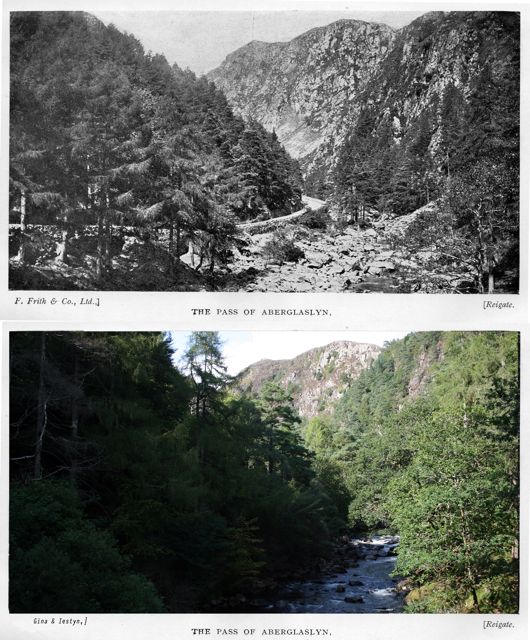
And a charming walk from there still takes you to the Aberglaslyn pass, just as all those years ago, and it even looks quite the same, except the trees have grown a lot.

…looking back from the romantic Pont Aberglaslyn we have an uninterrupted view of naked brown precipices rising to the sky beyond the fir trees and the dashing stream at our feet. (Teas and refreshments may be obtained at the bridge.)